
Rich Chinese are exiting Singapore as wealth regulations tighten: ‘my patience is gone’
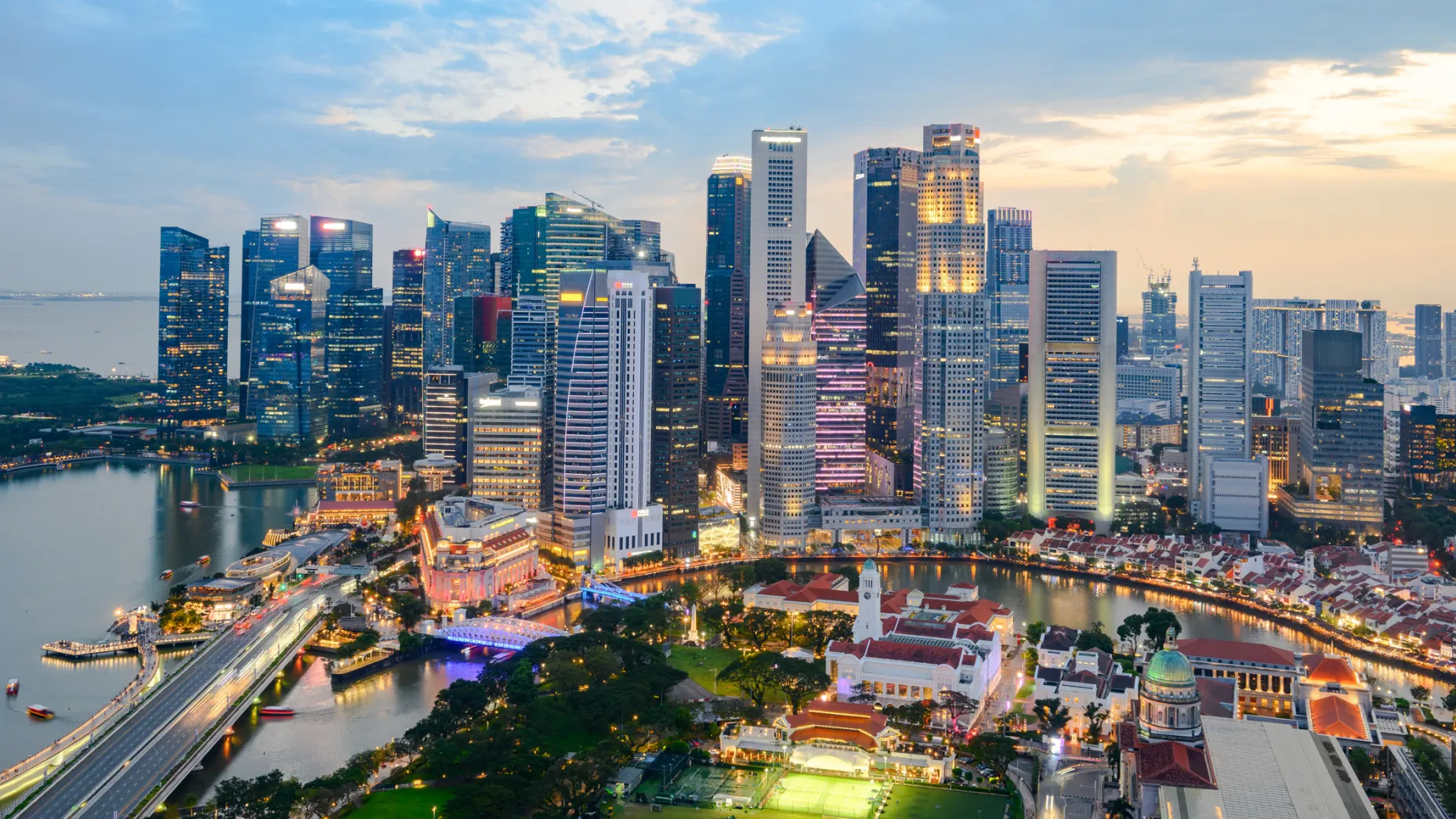
Singapore’s skyline at sunset.
Deejpilot | E+
Singapore’s status as a premier wealth hub for affluent mainland Chinese families is diminishing, reversing a significant inflow that once came at the expense of rival financial centers like Hong Kong and Japan.
The city-state's allure surged post-2019, following pro-democracy protests in Hong Kong and Beijing's subsequent introduction of a national security law, which prompted many mainland families to seek distance. Singapore’s political stability, favorable family-office regime, independent courts, and Mandarin fluency made it a natural draw. However, a turning point came with a massive 3 billion Singapore dollar ($2.3 billion) money-laundering scandal in 2023, known locally as the “Fujian case.”
Regulatory Tightening Triggers an Exodus
In the scandal's wake, regulators and banks embarked on an aggressive compliance overhaul, tightening rules and re-screening wealthy clients. “When the Fujian news broke, a lot of these wealthy Chinese left. So literally, almost all … they go to Hong Kong, the Middle East, Japan,” said Ryan Lin, a director at Bayfront Law in Singapore.
This departure has accelerated. Lin noted a 50% drop in applications from mainland clients compared to 2022, attributing it to stringent new compliance checks. A key chilling factor has been the Monetary Authority of Singapore’s (MAS) push to strengthen regulations, particularly around cryptocurrency. New 2025 rules require platforms offering crypto or tokenized equities to customers outside Singapore to be licensed, with MAS signaling approvals would be rare and imposing steep capital requirements.
“So for this year, those who are in the crypto space particularly, they have all gone because of this particular legislation by the MAS,” Lin said, adding that the exodus is “very driven by regulations.”
Operational Hurdles and Shifting Preferences
The fallout left many clients in limbo. Iris Xu, founder of corporate services firm Jenga, explained that banks' sweeping “clean-ups” involved redoing know-your-customer (KYC) checks and sometimes closing accounts, destroying clients' patience. “If you don’t give them accounts, where are they going to do business?” Xu said, noting funds moved to Japan, Hong Kong, and Dubai instead.
Barriers extend beyond finance. Applicants for permanent residence and family offices face extensive background checks deemed invasive. “From their point of view, they’re thinking: Do I really need to declare my illegitimate son just because I want to manage wealth in Singapore?” Lin remarked.
Lifestyle is also a factor, especially for the younger rich. “When they lived in Hong Kong before, they might be partying at four or five in the morning with friends. And they like that lifestyle,” said Christopher Aw, a partner at Pandan Investments, noting relocations to Dubai or Hong Kong.
The Competitive Landscape Rebalances
According to advisory firm Henley & Partners, Singapore is set for a sharp slowdown in wealth migration in 2025, with a projected net inflow of 1,600 millionaires—less than half the 3,500 expected in 2024.
Hong Kong is actively capitalizing on this shift by rolling out additional measures like tax incentives and revamping its Capital Investment Entrant Scheme to lower residency barriers. Carman Chan of Click Ventures noted that many family office peers are relocating back to Hong Kong, citing faster KYC approvals and more flexible hiring rules compared to Singapore's strict quotas for tax exemption schemes.
“I was quite surprised, because I think a lot of these wealthy Chinese have very short memories. They forgot why they came to Singapore in the first place,” Lin said.
Dominic Volek of Henley & Partners frames the trend as a rebalancing and hedging of jurisdictional exposure. “Rising regulatory scrutiny, tightening compliance regimes, and social shifts may contribute to their desire for greater privacy and flexibility elsewhere,” he said.
As Jenga’s Iris Xu concluded, “The past few years have definitely been a good time for Singapore, and having some corrections now is normal.”
Recent
News




Newsletter
Subscribe to our mailing list to get the new updates!

Subscribe our newsletter to stay updated
Most
Reviews
Finance

- Sat, 17 Jan 2026
Iran’s road to revolt
Finance

- Sat, 17 Jan 2026
The right will want a United States of Europe
Markets

Markets

- Mon, 26 Jan 2026
Dropbox (DBX) Exceeds Market Returns: Some Facts to Consider
Economy