Replacement Windows Near Me: 6 Hidden Costs Most Aussie Homeowners Don’t See Coming
You've noticed the drafts. The condensation between the panes. The power bills climbing higher every winter.
You've started searching for replacement windows near me, window companies near me, and replacement window installers near me. The quotes look reasonable – maybe $800 to $1,500 per window. But here's what most window companies won't tell you upfront: the price on the quote isn't the price you'll pay. Disposal fees, lead times, structural repairs, and hidden add-ons can add 30-50% to your final bill.
This guide isn't a generic "new windows are great" article. Instead, we'll show you the 6 hidden costs that surprise Australian homeowners, how to find a reputable local window replacement company, and the specific questions you must ask before signing a contract.
Part 1: The 6 Hidden Costs of Window Replacement
When you get a quote for replacement windows near me, here's what's often NOT included.
1. Disposal of Old Windows ($15-$50 per window)
Removing old windows costs money. Some companies include disposal; most don't. Ask upfront: "Does your quote include hauling away the old windows?"
2. Lead Times & Storage Fees ($0-$100+ if delayed)
Custom windows can take 4-8 weeks to arrive. If your renovation is delayed and windows arrive early, some suppliers charge storage fees. Confirm: "What happens if delivery is delayed on your end?"
3. Structural Repairs ($200-$1,000+ per window)
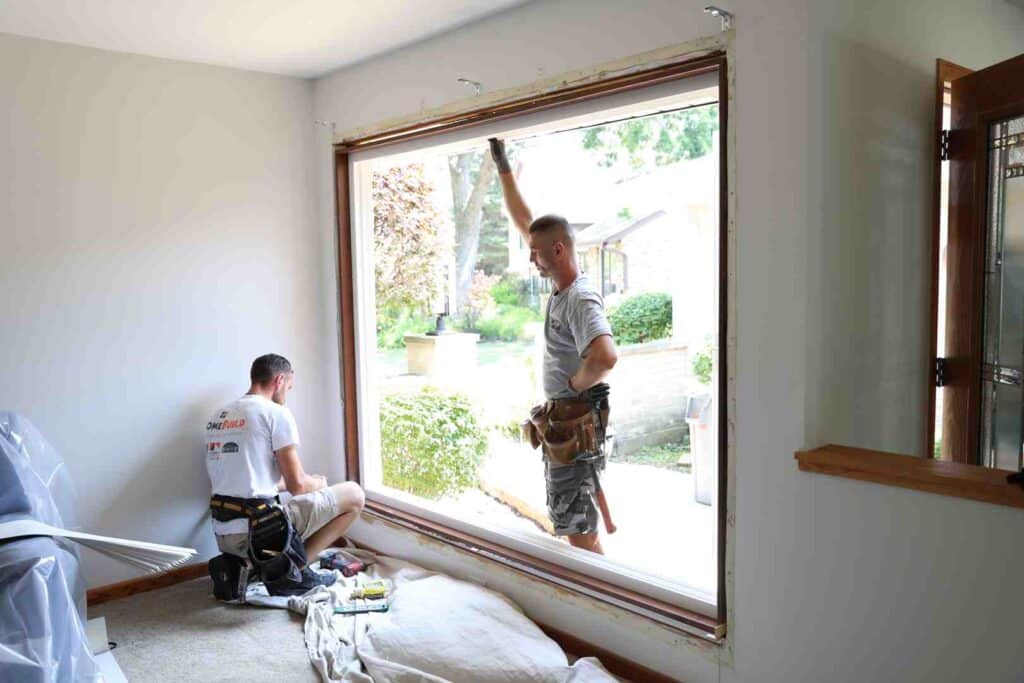
Once old windows are removed, rot or water damage is often revealed. Window installers don't include repairs in their quotes. Budget 10-20% extra for unforeseen structural issues.
4. Coloured Frames vs. Standard White (+15-30% upcharge)
Black, grey, or custom-coloured frames look great – but they cost significantly more than standard white. If your quote says "white," confirm the upcharge for other colours.
5. Locks, Handles & Security Screens ($100-$400 per window)
Basic quotes often include only the frame and glass. Locks, handles, hinges, and security screens may be extra. Ask: "What hardware is included? Is a security screen included?"
6. Scaffolding or High-Reach Access ($500-$2,000)
For second-storey windows, installers need scaffolding or a cherry picker. This is almost never included in standard window quotes. If you have a two-storey home, ask specifically about access costs.
| Hidden Cost | Typical Range | What to Ask |
|---|---|---|
| Disposal | $15-$50 per window | "Is disposal included?" |
| Storage fees | $0-$100+ | "Who pays if delivery is delayed?" |
| Structural repairs | $200-$1,000+ | "What happens if rot is found?" |
| Coloured frames | +15-30% | "Is white standard? What's the upcharge for black?" |
| Hardware | $100-$400 per window | "Are locks and handles included?" |
| Scaffolding | $500-$2,000 | "Do I need scaffolding? Is it included?" |
Part 2: Window Companies Near Me – How to Find a Reputable Installer
When you search for window companies near me, you'll see national chains, local specialists, and handymen who "do windows." Here's how to choose.
Questions to ask before hiring:
Question 1: "Are you licensed and insured?"
In Australia, window installers don't always need a specific license, but they should have public liability insurance. Ask for a certificate of currency.
Question 2: "How long have you been in business?"
Companies that survive 5+ years have a reputation to protect. New companies can be fine, but do extra due diligence.
Question 3: "Do you have local references?"
Ask for 2-3 recent jobs in your area. Call the homeowners. Ask: "Were they on time? Was cleanup done? Any hidden costs?"
Question 4: "What warranties do you offer?"
- Manufacturer warranty (on the window itself): typically 5-15 years
- Installation warranty (on labour): 1-5 years
- Glass breakage warranty: sometimes separate
Question 5: "Who handles the permit?"
Some councils require permits for window replacement, especially if you're changing window sizes. Ask if they pull permits or if it's your responsibility.
| Question | What a Good Answer Sounds Like |
|---|---|
| Licensed and insured | "Here's our certificate of insurance" |
| Years in business | "We've been installing windows in [city] for 12 years" |
| Local references | "Here are 3 recent clients you can call" |
| Warranties | "10-year manufacturer, 5-year labour" |
| Permits | "We handle all permits" |
Part 3: Types of Replacement Windows – What's Right for Your Home?
When you talk to replacement window installers near me, they'll offer different window types. Here's what each is best for.
Double-Hung Windows (Traditional)
Both sashes move. Good for ventilation. Easy to clean (most tilt in). Common in older Queenslanders and Victorian homes.
Sliding Windows (Modern)
Slide horizontally. No protruding parts. Good for walkways and decks. Popular in contemporary builds.
Casement Windows (Crank-Out)
Hinge on the side, crank outward. Excellent seal (good for energy efficiency). Common in colder climates.
Awning Windows (Top-Hinged)
Hinge at the top, open outward. Good for ventilation even in light rain. Often used above fixed windows or in bathrooms.
Fixed / Picture Windows (Non-Operable)
Do not open. Maximum glass area. Best for views, not for ventilation.
| Window Type | Best For | Ventilation | Cleaning Ease | Energy Efficiency |
|---|---|---|---|---|
| Double-hung | Traditional homes | Good | Easy (tilt-in) | Moderate |
| Sliding | Modern homes, walkways | Moderate | Moderate | Moderate |
| Casement | Cold climates | Excellent | Moderate | Excellent |
| Awning | Bathrooms, wet areas | Good | Moderate | Good |
| Fixed | Views, natural light | None | Easy | Excellent |
Part 4: uPVC vs Aluminium vs Timber – Which Material Lasts?
Australian homeowners choose between three main window materials. Each has trade-offs.
uPVC (Unplasticised Polyvinyl Chloride)
- Pros: Excellent energy efficiency, low maintenance, good soundproofing, affordable
- Cons: Limited colour options (white or cream), can look "plasticky"
- Lifespan: 25-35 years
- Cost: $600-$1,200 per window installed
Aluminium
- Pros: Strong, slim frames (more glass), durable, modern look, recyclable
- Cons: Poor energy efficiency (unless thermally broken – ask for "thermal break"), conducts heat/cold
- Lifespan: 30-40 years
- Cost: $800-$1,800 per window installed (thermally broken costs more)
Timber
- Pros: Beautiful natural look, excellent insulation, traditional character
- Cons: High maintenance (painting every 3-7 years), prone to rot, expensive
- Lifespan: 30-50 years (with proper maintenance)
- Cost: $1,500-$3,500+ per window installed
For most Australian homes: uPVC is the best value. It's energy-efficient, low-maintenance, and affordable. Aluminium with thermal break is good for coastal areas (salt-resistant). Timber is for heritage homes where appearance is critical.
| Material | Energy Efficiency | Maintenance | Lifespan | Cost | Best For |
|---|---|---|---|---|---|
| uPVC | Excellent | Low | 25-35 years | $ | Most homes |
| Aluminium | Poor (unless thermal break) | Low | 30-40 years | $$ | Modern, coastal |
| Timber | Excellent | High (painting) | 30-50 years | $$$ | Heritage homes |
Part 5: Local Window Replacement – How to Get Accurate Quotes
To get accurate local window replacement quotes, prepare before the estimator arrives.
What to have ready:
- Number of windows (count them)
- Approximate sizes (measure width and height)
- Current window type (sliding, double-hung, casement)
- Desired material (uPVC, aluminium, timber)
- Any problem windows (rotten frames, hard to open)
Get quotes from 3 companies
Prices vary wildly. One company might quote $800 per window; another $1,500 for the same window. Don't accept the first quote.
Ask for itemised quotes
A good quote lists:
- Cost per window
- Type of glass (single, double, or triple glazed)
- Frame material and colour
- Hardware included (locks, handles, hinges)
- Disposal fees
- Labour
- Warranties
Beware of "free measure and quote" traps
Some companies offer free quotes but pressure you to sign immediately. Take the quote home. Compare. Don't decide on the spot.
| What to Compare | Why It Matters |
|---|---|
| Cost per window | Apples-to-apples comparison |
| Glass type | Double-glazed costs more but saves energy |
| Frame material | uPVC vs aluminium vs timber |
| Hardware included | Locks and handles add up |
| Disposal fees | Hidden cost if not included |
| Warranties | Protects your investment |
Part 6: Energy Efficiency – What You Need to Know
New windows can slash your energy bills – but only if you choose the right glass.
Single-glazed (cheapest, least efficient)
Standard in older homes. Poor insulation. Not recommended for new windows.
Double-glazed (standard for new windows)
Two panes of glass with an air or gas gap. Significantly reduces heat transfer. Recommended for most Australian homes.
Triple-glazed (most efficient, most expensive)
Three panes. Best for cold climates (Tasmania, Victoria highlands). Overkill for most of Australia.
Low-E (low emissivity) coating
Invisible metallic coating that reflects heat back into the room. Essential for double-glazed windows. Ask: "Does this glass have Low-E coating?"
Gas fills (Argon or Krypton)
Inert gas between panes improves insulation. Argon is standard; krypton is better but more expensive.
| Glass Type | Energy Savings | Cost Premium | Best For |
|---|---|---|---|
| Single-glazed | None | Base | Not recommended |
| Double-glazed (air) | 30-50% | +40-60% | Most homes |
| Double-glazed (argon) | 40-60% | +50-70% | Cold climates |
| Triple-glazed | 50-70% | +100-150% | Very cold climates |
Part 7: Replacement Window Installers Near Me – Red Flags to Avoid
Red Flag #1: "We can start tomorrow"
Reputable installers are booked weeks or months in advance. Immediate availability often means low quality or no current work.
Red Flag #2: "No need for a written contract"
Never proceed without a written contract. It should include scope of work, materials, timeline, payment schedule, and warranties.
Red Flag #3: "Cash discount – no receipt"
This means no warranty, no insurance, and no recourse if something goes wrong. Always pay with a traceable method (bank transfer, credit card).
Red Flag #4: "We don't do permits"
Some councils require permits. If they refuse to handle permits, they may be unlicensed or cutting corners.
Red Flag #5: No local address or phone number
Scammers use temporary numbers and no physical office. Verify their ABN and physical address.
| Red Flag | Why It's Dangerous |
|---|---|
| "Start tomorrow" | Low demand = low quality |
| No written contract | No legal protection |
| Cash only | No warranty, no recourse |
| No permits | Illegal work |
| No local address | Likely a scam |
Part 8: Frequently Asked Questions About Window Replacement
How much does window replacement cost in Australia?
Single window: $600-$2,500 depending on size, material, glass type. Whole house (10 windows): $6,000-$25,000.
Do I need council approval to replace windows?
Generally no, if you're replacing like-for-like (same size, same location). If you're changing window size or adding new windows, you may need approval. Check with your local council.
What's the best time of year to replace windows?
Spring and autumn are ideal – moderate temperatures help seals set properly. Winter is fine but may be uncomfortable with windows open. Summer is fine but hot.
How long does window replacement take?
Installation for a typical house: 1-3 days. Ordering custom windows: 4-8 weeks lead time.
Can I replace windows myself?
Yes, if you're handy. But mistakes are expensive (water leaks, poor fit, no warranty). Professional installation is recommended.
What's the payback period for energy-efficient windows?
5-15 years, depending on your climate, energy prices, and how long you stay in the home.
Part 9: Your Action Plan – Getting New Windows
Step 1 – Count and measure (1 day)
Count your windows. Measure width and height. Note problem windows.
Step 2 – Research materials (2-3 days)
Decide on uPVC, aluminium, or timber. Consider double-glazing with Low-E coating.
Step 3 – Get 3 quotes (1-2 weeks)
Search replacement windows near me and window companies near me. Call 3-5 companies. Ask the 5 questions from Part 2.
Step 4 – Compare itemised quotes
Compare cost per window, glass type, materials, hardware, disposal, and warranties.
Step 5 – Check references
Call 2-3 recent customers. Ask about timeliness, cleanup, hidden costs, and whether they'd hire them again.
Step 6 – Sign contract and schedule
Never pay in full upfront. Typical deposit: 10-20%. Balance due on completion.
Key documents to keep:
- Written contract
- Warranty certificates
- Proof of insurance
- Payment receipts