Beyond the Finger Stick: A Guide to Modern Blood Sugar Monitoring Options
If you've ever pricked your finger to test your blood sugar, you know the drill. The tiny lancet, the small drop of blood, the few seconds of waiting. For many Americans managing diabetes or prediabetes, this routine may happen multiple times a day. But what if you didn't have to rely only on finger-stick testing? What if you could check a wearable device or smartphone to review your glucose readings and trends? That's the idea behind a new generation of lifestyle blood sugar monitor devices—tools that can provide information about glucose patterns alongside other health data. Whether you're looking for a skin blood sugar monitor that may reduce the need for routine finger sticks, a high blood sugar monitor for tracking glucose levels, or even a free sugar tester to get started, this guide covers important considerations when comparing modern glucose monitoring options.
Why Your Glucose Levels Matter (Even If You Don't Have Diabetes)
When most people think about blood sugar, they think about diabetes. But glucose is an important part of normal body function. After you eat, your blood glucose generally rises and then changes as your body processes the meal. Glucose patterns can be affected by factors such as food, physical activity, sleep, stress, medications, and individual health conditions.
For people with diabetes or other conditions affecting glucose regulation, monitoring can provide useful information for managing their condition. For people without diabetes, the usefulness of continuous glucose data for general wellness can vary, and glucose readings should not be interpreted as a diagnosis of a medical condition.
The growing interest in metabolic health has increased interest in using glucose data to understand individual responses to meals and activities. Instead of relying only on assumptions, some users can review glucose trends over time. However, individual readings can vary, and medical decisions should be based on appropriate clinical guidance rather than a consumer device alone.
What Is a Continuous Glucose Monitor (CGM)?
A CGM is a wearable device that tracks glucose levels throughout the day and night. Unlike a traditional sugar monitor that requires a finger prick for each reading, a CGM generally uses a small sensor inserted just under the skin to measure glucose in interstitial fluid. Depending on the device, the sensor may be worn on the back of the arm or another approved location. Data can be transmitted to a smartphone or receiver, allowing users to review current readings, trends, and certain alerts.
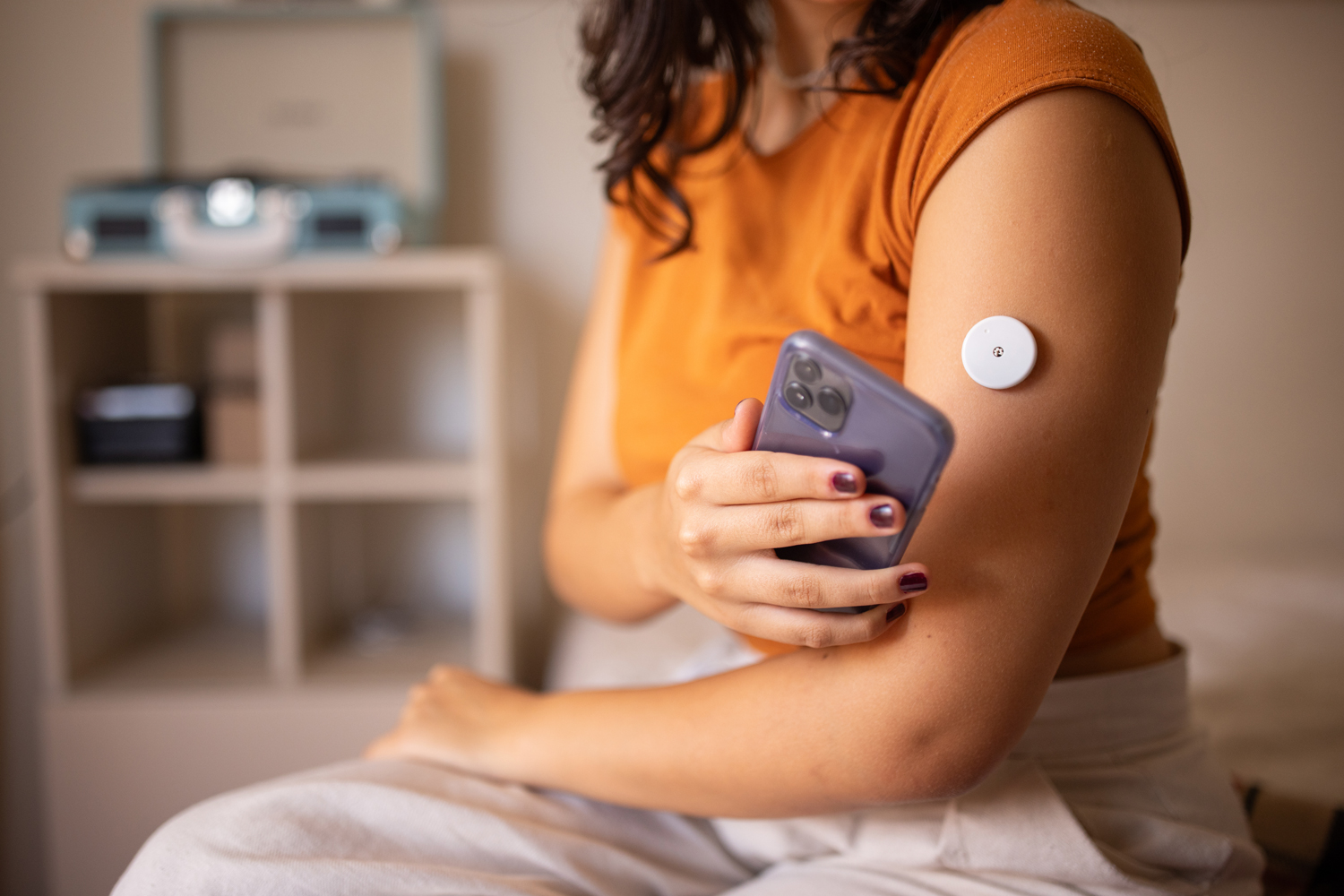
Sensor wear time varies by brand and model. Some CGMs are designed for approximately 7 to 14 days of use, while other systems may have different replacement schedules. Water resistance also varies by device, so users should follow the manufacturer's instructions for showering, swimming, and exercise.
CGM readings are not identical to blood glucose measurements, and accuracy can vary by device and circumstances. Some situations may require confirmation with a blood glucose meter, particularly when readings do not match symptoms or when making treatment decisions. Follow the instructions provided for the specific device and consult a healthcare professional when appropriate.
New Options: Over-the-Counter and Non-Invasive Devices
In recent years, some glucose monitoring systems have become available over the counter in the United States, expanding access to certain consumers who may not have a traditional prescription. Availability, intended users, regulatory status, and features vary by product and can change over time.
Abbott's Lingo is an example of an over-the-counter glucose biosensor available for certain adult users. Depending on the current product configuration and intended use, Lingo can provide glucose information through a smartphone app and may offer features related to food, activity, and glucose trends. Product availability, eligibility, wear time, features, and pricing should be verified through the manufacturer's current information.
Signos is another consumer-oriented glucose monitoring platform that uses a glucose biosensor together with a digital platform. Depending on the current offering, the system can provide information about glucose trends in connection with factors such as food, exercise, stress, and sleep. Its intended use and features should be checked against the current product information.
Biolinq Shine represents another approach to glucose-related monitoring. Products using non-traditional sensing technologies may present information in simplified formats rather than displaying detailed glucose numbers. Availability, regulatory status, accuracy, and intended use should be verified before relying on any such device for health decisions.
Sinocare iCan i3 is another glucose monitoring option marketed for wearable use. Features such as sensor design, smartphone connectivity, alerts, intended users, and wear time depend on the specific model and market. Verify current product specifications and regulatory information before purchase or use.
Traditional Monitors: Still Useful
Not everyone needs or wants a wearable device. Traditional blood glucose monitors—such as products from brands including Dr. Morepen and Accu-Chek—remain widely available and can be useful for people who need or prefer finger-stick testing. These devices generally require a small blood sample and provide a reading after a short processing period. Starter packs may include test strips and lancets, while some promotions may offer a free sugar tester with a qualifying purchase.
The Accu-Chek Instant, for example, has offered connectivity with compatible digital tools and can store blood glucose readings, depending on the device configuration. Features, memory capacity, compatibility, and measurement time can vary by model and should be confirmed in the current product documentation.
A potential advantage of traditional monitors is their relatively simple setup and the ability to use them without continuously wearing a sensor. The trade-off is that finger-stick testing generally provides individual readings rather than continuous glucose trends.
- Traditional glucometer: Uses a finger prick to obtain an individual blood glucose reading. Costs vary by meter, test strips, lancets, and retailer.
- Prescription CGM: Uses a wearable sensor to provide ongoing glucose information. Coverage and out-of-pocket costs vary by insurance plan, eligibility, device, and location.
- OTC CGM: Certain systems can be purchased without a traditional prescription, depending on product and market. Pricing, intended use, and wear period vary.
- Non-invasive or emerging sensors: May use alternative sensing technologies or simplified feedback. Regulatory status, accuracy, availability, and intended use vary by product.
What to Look for in a Lifestyle Blood Sugar Monitor
If you're considering a lifestyle blood sugar monitor, here are several factors to consider.
Accuracy matters. No consumer device should automatically be assumed to be perfect. Look for information about the device's regulatory status, intended use, accuracy specifications, and limitations. For medical monitoring, use a device appropriate for your condition and follow guidance from your healthcare professional.
Data access is key. Some devices provide detailed glucose numbers and trend information, while others provide simplified feedback. Consider whether you need detailed readings, trend information, alerts, or a simpler interface. The appropriate choice depends on your intended use.
Cost adds up. The total cost can include the initial device, sensors, replacement supplies, subscriptions, test strips, lancets, and other accessories. OTC and prescription products can have substantially different pricing, and insurance coverage may affect out-of-pocket costs.
Comfort and convenience. Consider how the device attaches, how long it can be worn, whether it is compatible with your routine, whether it can be exposed to water, and how easy the associated app or reader is to use. Always follow the manufacturer's instructions.
How to Get a Free Sugar Monitor
Many people search for a free sugar monitor or free sugar tester, and there may be legitimate ways to reduce the cost of certain devices.
Manufacturer promotions. Some manufacturers and retailers may periodically offer promotions involving meters, test strips, or other glucose-monitoring supplies. Availability and eligibility vary, so check the current offer terms directly.
Insurance coverage. Depending on the diagnosis, treatment needs, insurance plan, and eligibility criteria, certain glucose monitoring devices may be covered in whole or in part. Coverage differs between private insurance, Medicare, Medicaid, and individual plans. Confirm current coverage with your insurer or healthcare provider.
Wellness programs. Some employers or health plans may offer discounted or subsidized glucose-monitoring products as part of health programs. Check the current terms with your employer or plan administrator.
Clinical trials. Companies and research organizations may recruit participants for glucose-monitoring studies. Participation requirements and available devices vary by study.
Be cautious of offers that appear unusually generous. Some fraudulent offers may use the promise of a "free" monitor to collect personal information or impose unexpected charges. Verify the source, terms, privacy practices, and any required payment before providing personal information.
Using a High Blood Sugar Monitor for Better Health
For people managing diabetes or other conditions affecting glucose, a high blood sugar monitor can be one component of a broader monitoring plan. Target glucose ranges are individualized and may depend on factors such as age, type of diabetes, medications, pregnancy status, and other health considerations. A healthcare professional can help establish appropriate targets.
Time in range (TIR) is one metric used with CGMs to describe the amount of time glucose remains within a specified range. A commonly used range is 70–180 mg/dL for many people with diabetes, but the appropriate target and percentage can vary by individual. Do not assume that one target applies to everyone.
CGMs can make it easier to observe changes in glucose throughout the day. Users may see glucose trends following meals, physical activity, or other events. However, a glucose reading alone does not determine what action should be taken. People using glucose-lowering medication should follow their individualized treatment plan and seek medical advice when necessary.
People without diabetes may also be interested in glucose patterns, but consumer glucose monitoring should not be treated as a substitute for medical testing or diagnosis. If you are concerned about high or low glucose levels, discuss appropriate testing with a healthcare professional.
The Future: Non-Invasive and Wearable
The development of non-invasive and wearable glucose-monitoring technologies continues. Some emerging products aim to reduce or eliminate traditional finger sticks or sensors inserted under the skin. However, the capabilities, accuracy, regulatory status, and intended uses of these technologies vary considerably.
Some devices or applications may claim to estimate glucose trends using data from wearables or other sensors. Such claims should be evaluated carefully, particularly when a product is not authorized or cleared for medical glucose measurement. A device intended for general wellness should not automatically be treated as a substitute for an FDA-cleared or otherwise appropriately authorized medical device.
For medical decision-making, use monitoring equipment that is appropriate for your condition and authorized for the intended use in your location, and follow advice from a qualified healthcare professional.
Common Questions About Glucose Monitoring
Do I need a prescription for a CGM?
Some CGMs are available over the counter, while other systems may require a prescription depending on the product, intended use, and location. Check the current requirements for the specific device.
How much does a CGM cost without insurance?
Costs vary considerably based on the device, sensor replacement schedule, subscription model, retailer, and location. Prescription and over-the-counter systems can have different pricing structures. Check current manufacturer and retailer pricing rather than relying on an older estimate.
Are non-invasive glucose monitors accurate?
Accuracy varies by technology and product. Devices that estimate glucose without directly measuring interstitial fluid or blood may have different limitations from established CGMs. Review the product's regulatory status, published performance information, and intended use before relying on its readings.
Can I use a CGM for weight loss?
Some people use consumer CGMs to observe glucose patterns while changing diet or activity, but a CGM is not itself a guaranteed weight-loss treatment. Evidence regarding the benefits of CGM use for weight management in people without diabetes is still an area of research. Weight-management decisions should consider overall diet, physical activity, health conditions, and professional guidance where appropriate.
What's the easiest glucose monitor to use?
Ease of use depends on the individual. Some people may prefer a traditional meter, while others may prefer a wearable CGM with a smartphone app. Consider the amount of information you need, the device's setup requirements, sensor replacement schedule, cost, and intended use.
Your Next Step
Monitoring blood sugar does not have to mean relying exclusively on finger pricks and paper logbooks. Today's options include traditional glucometers, prescription CGMs, certain over-the-counter CGMs, and emerging wearable technologies. Each option has different costs, features, limitations, and intended uses.
Start by asking yourself what you want to learn. Do you need glucose information for medical management? Or are you interested in general awareness of how lifestyle factors relate to glucose patterns? The answer can help guide your comparison of monitoring options.
If you are considering a free sugar tester, a lifestyle blood sugar monitor, or another glucose-monitoring device, verify the current product information, regulatory status, costs, and intended use. For diagnosis, treatment decisions, or concerns about abnormal glucose levels, consult an appropriately qualified healthcare professional.