
Elon Musk envisions humanoid robots everywhere. China may be the first to make it a reality
Beijing/Shenzhen — While Elon Musk positions humanoid robotics as central to Tesla's future, a wave of Chinese companies is set to beat the American automaker to market, with plans to begin mass-producing these advanced machines as early as next year. Backed by Beijing's strategic focus and the nation's formidable manufacturing ecosystem, China is rapidly emerging as the initial commercialization leader in a field projected to be worth trillunms of dollars.
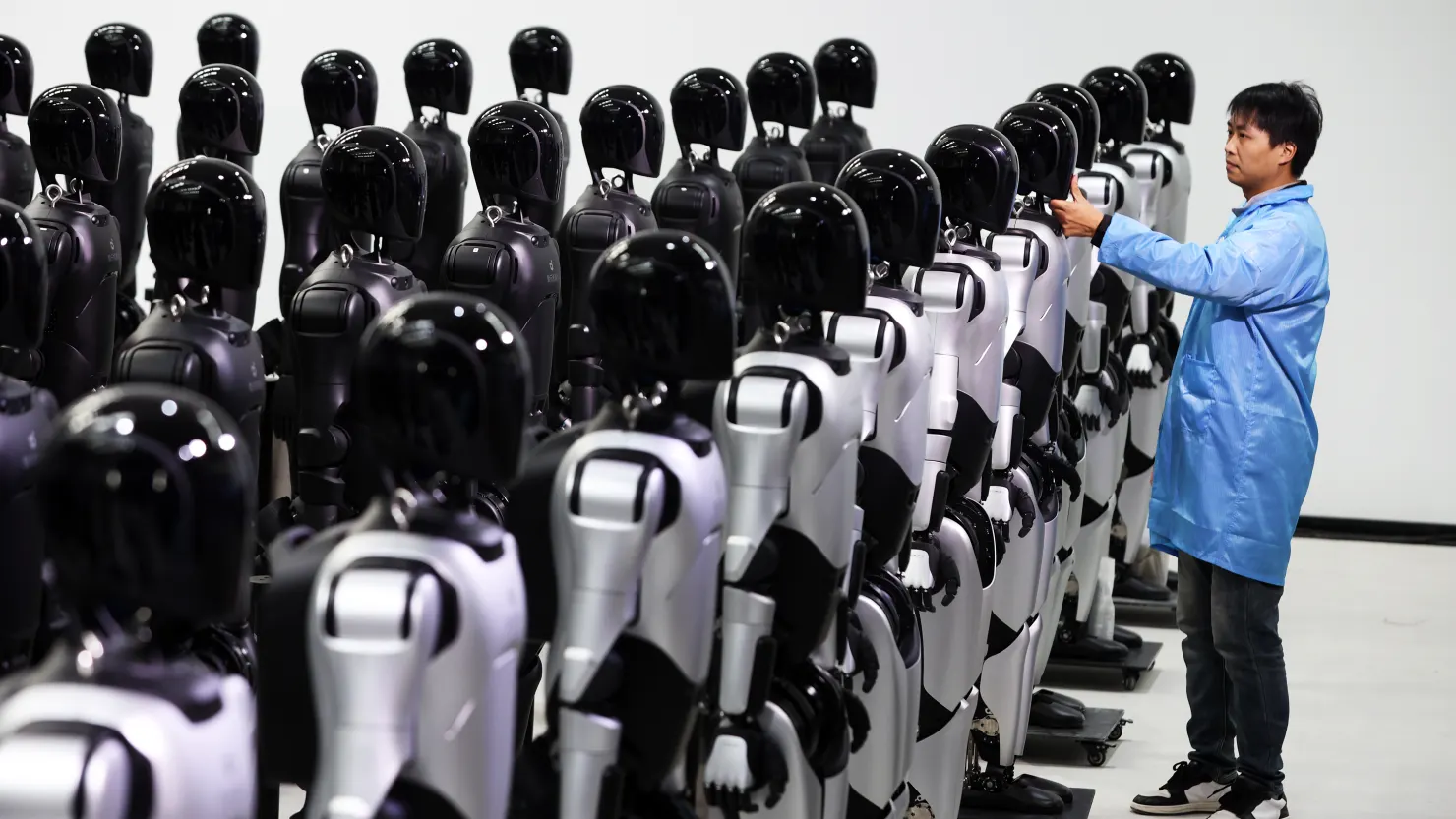
"China currently leads the United States in the early commercialization of humanoid robots," said Andreas Brauchle of consultancy Horváth. This push is driven by a need to address demographic pressures from an aging population, fuel economic growth, and compete for tech supremacy. The technology is explicitly highlighted in China's latest five-year plan, with over 150 domestic companies now vying for position in what some analysts forecast could become a $9 trillion global market by 2050.

Unitree robot performs for visitors at China Summit in pavilion 1 during Web Summit first day of this year’s event on November 11, 2025 in Lisbon, Portugal.
Key Players Ramp Up for Scale
Leading Chinese firms are moving aggressively from prototype to production. UBTech Robotics, which recently raised $400 million, plans to produce 5,000 humanoid robots in 2026 and double that in 2027. Unitree, preparing for a $7 billion IPO, and electric vehicle maker Xpeng, with its "Iron" robot, are also targeting mass production next year. China's deep manufacturing supply chain offers a significant cost advantage, with UBTech anticipating annual production cost reductions of 20% to 30%.
However, the sector faces substantial bottlenecks, including reliance on U.S. chips like those from Nvidia, the immense technical challenge of replicating human dexterity, and the high unit cost—currently between $150,000 and $500,000—that must fall dramatically to compete with human labor.

Xpeng displayed its humanoid robot called “Iron” at the IAA auto show in Munich, Germany on September 8, 2025.
A Strategic Race with Different Advantages
The competition between China and the U.S. reflects divergent strengths. China leverages its manufacturing scale and speed, while American firms, including Tesla, often bet on vertical integration—controlling more of the supply chain to achieve superior performance and safety. "The belief is that tighter ownership of the full system will deliver... defensible intellectual property," noted Karel Eloot of McKinsey.
Despite the strategic push, Chinese regulators have warned of a potential investment bubble in the crowded humanoid robotics sector, drawing parallels to past boom-and-bust cycles in technologies like electric vehicles. This caution highlights the high-stakes gamble inherent in this new frontier.
As 2026 approaches, the robotics arena is becoming a key battleground in the broader U.S.-China tech race. China's strategic pivot toward early mass production will test whether its manufacturing prowess can overcome technical and supply chain hurdles to establish a decisive early lead in this transformative and fiercely competitive ecosystem.
Recent
News



Newsletter
Subscribe to our mailing list to get the new updates!

Subscribe our newsletter to stay updated
Most
Reviews
Banner

Finance

- Mon, 19 Jan 2026
FirstFT: Denmark sends more troops to Greenland as tensions rise
Business

Finance

- Fri, 16 Jan 2026
Investment banking’s liberation year
Markets

- Mon, 26 Jan 2026