
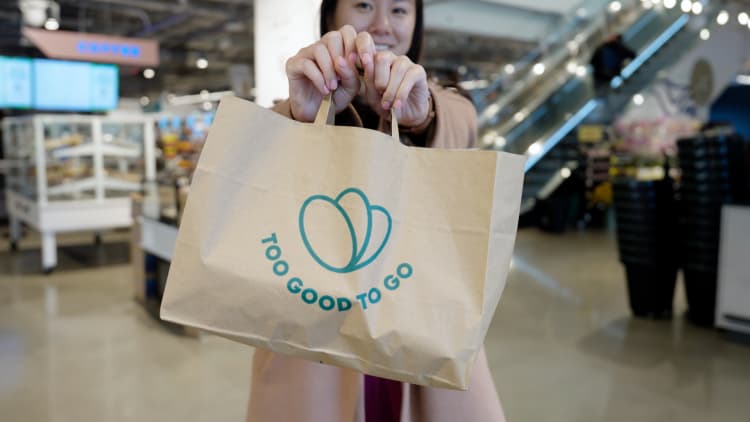
New York/Austin — In a major expansion aimed at combating food waste and affordability pressures, the surplus food app Too Good To Go is launching discounted grocery "surprise bags" at all 536 U.S. Whole Foods Market locations. The partnership, now extending to seven new categories including produce, meat, and seafood, offers bags valued between $21 and $30 for just $6.99 to $9.99—a discount of 50% to 70%.
The move comes as consumers grapple with persistent food inflation. Recent CPI data showed year-over-year price increases for staples like meat and poultry. "It's hard to put great food on the table... and as a result, finding ways to get some of that food at a better value is really important," said Chris MacAulay, Too Good To Go's VP for North America. The collaboration has already prevented 1.6 million meals from going to waste, aligning with Whole Foods' sustainability goals while driving incremental store traffic.
A Strategic Response to a "Bifurcated" Consumer Economy
The nationwide rollout reflects a strategic response to a divided economic landscape where non-wealthy consumers are aggressively seeking savings. "We're especially starting to see a great deal of bifurcation around different consumer segments," MacAulay noted. By offering essentials at steep discounts, the program targets households feeling the pinch, including the 42 million Americans whose SNAP benefits were recently paused during the government shutdown.
For Whole Foods, known for its premium pricing, the partnership serves as a tactical tool to enhance accessibility and value perception without a brand-damaging across-the-board price cut. Caitlin Leibert, Whole Foods' VP of sustainability, stated the program allows customers to "stretch every dollar further" and often leads to additional in-store purchases, benefiting the grocer's bottom line.
Scaling a Sustainable Model in a Competitive Market
This expansion represents a significant strategic scaling of a proven model. Previously limited to prepared foods, the inclusion of fresh groceries marks a pivotal strategic pivot for Too Good To Go, dramatically increasing its addressable market and utility. In the highly competitive grocery ecosystem, such partnerships are becoming a high-stakes differentiator, blending sustainability credentials with concrete consumer savings.
Both companies frame the initiative as one step in a longer journey. "We do not 'achieve' sustainability—it is a constant evolution," Leibert said. As food costs remain a central concern, programs that simultaneously tackle waste, affordability, and customer acquisition are likely to become an increasingly critical part of the modern grocery playbook.









.jpg)