
As secondhand luxury soars, authentication becomes a new gold standard
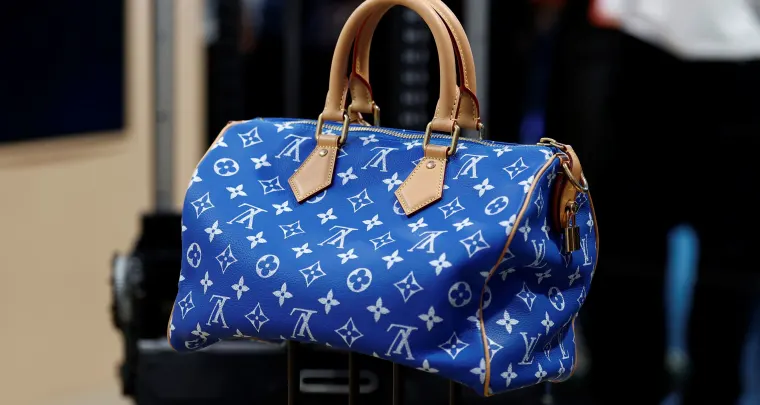
A Louis Vuitton bag is displayed at the LVMH Moet Hennessy Louis Vuitton stand during the Viva Technology conference dedicated to innovation and startups at Porte de Versailles exhibition center in Paris, France, June 12, 2025.
The explosive growth of the global pre-owned luxury market is confronting a critical inflection point, with sophisticated counterfeits threatening to undermine consumer confidence. As this financial sector expands at triple the rate of primary luxury retail, platforms are racing to develop verification systems that can authenticate everything from rare handbags to high-end watches—a technological arms race that will determine which players dominate this evolving marketplace.
According to an October report by Boston Consulting Group and Vestiaire Collective, the secondary luxury economy is projected to reach $360 billion by 2030, representing a seismic shift in how consumers access premium goods. This remarkable market expansion faces significant challenges from "superfakes"—counterfeits so advanced they reportedly utilize materials from the same suppliers as original manufacturers.
"The authentication challenge has reached unprecedented complexity," noted Jaewha Choi, CEO of South Korean trading platform Bunjang. "Even established brands occasionally struggle to identify their own counterfeits." This reality has transformed verification from a peripheral service into the central operational pillar for resale platforms.
Reinventing Trust Infrastructure
Major marketplaces are responding with substantial technological investment, developing hybrid systems that combine human expertise with artificial intelligence. Singapore-based Carousell recently opened its first physical authentication center, where specialists examine items using specialized equipment before they're listed—a physical manifestation of the digital transformation now underpinning high-value transactions.
"Our credibility represents our core business value," emphasized Tresor Tan, Director at Carousell Luxury. The company has developed proprietary databases covering hundreds of product categories and offers comprehensive authenticity guarantees—establishing what industry analysts term a critical advantage in building transactional trust.
Bunjang has implemented an equally sophisticated approach, deploying machine learning algorithms trained on hundreds of thousands of verified examples. "Our systems continuously evolve to recognize new counterfeiting techniques," Choi explained. The platform now reports 99.9% authentication accuracy—a performance benchmark that has become essential for serious market participants.
Verification as Economic Engine
This strategic focus on trust demonstrates clear commercial impact. Bunjang revealed that luxury transactions now constitute over 25% of its annual volume, with the category growing 30% year-over-year. Similarly, Carousell's luxury division has expanded from its origins as a digital platform to include dedicated physical spaces—a progression that mirrors how specialized platforms develop deeper user engagement through focused verticalization.
"Consumers increasingly recognize that authenticity assurance carries tangible value," Tan observed. This reflects broader market dynamics where buyers balance price considerations against verification certainty—particularly for items where even minor authentication doubts can destroy resale value.
Redefining Luxury Consumption
While financial accessibility drives 80% of pre-owned purchases, the market reveals more nuanced consumer psychology. Discerning buyers increasingly pursue discontinued collections and rare pieces, transforming luxury resale into a form of strategic acquisition that combines financial prudence with curated selection.
"This represents a fundamental reimagining of luxury ownership," Choi commented. Younger consumers particularly embrace fluid consumption models, participating in what analysts term circular consumption—a system where items circulate through multiple owners while maintaining their value through verified authenticity.
"The behavioral shift extends beyond bargain hunting," noted Samina Virk of Vestiaire Collective. "Pre-owned luxury has become integrated into sophisticated asset strategy for modern consumers." This evolution suggests that future market leadership will belong to platforms that master both technological verification and the nuanced understanding of how luxury goods function as both emotional possessions and transferable assets.
Recent
News


Newsletter
Subscribe to our mailing list to get the new updates!

Subscribe our newsletter to stay updated
Most
Reviews
Economy

- Fri, 16 Jan 2026
USD/CAD steady as Oil rebound supports CAD, US data underpins USD
Business

- Sat, 17 Jan 2026
Is Netflix’s New No. 1 Hit, ‘The Rip,’ Worth Watching?
Economy
Markets
- Wed, 28 Jan 2026
Why the Market Dipped But Fiverr International (FVRR) Gained Today
Finance