
Trump administration’s new quarters feature pilgrims, ditching civil rights theme
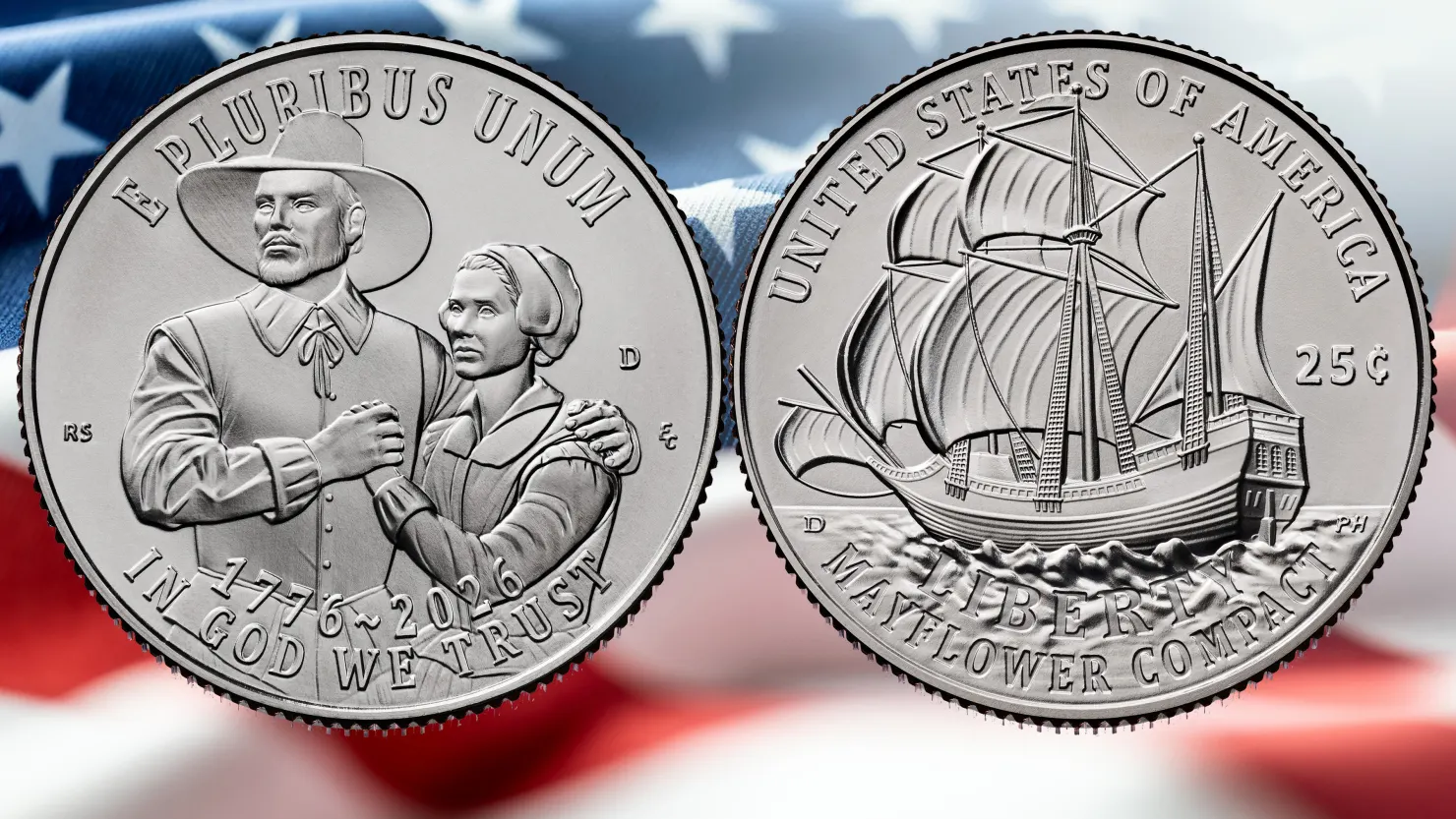
Commemorative quarter-dollar depicting two Pilgrims on front and the Mayflower on the back.
The U.S. Mint has finalized the designs for a special quarter-dollar coin to commemorate America's 250th anniversary in 2026, opting for depictions of pilgrims and early presidents over previously considered themes highlighting civil rights milestones. The selection has drawn attention for its emphasis on foundational figures rather than 20th-century social movements.
The five chosen designs will feature:
Pilgrims and the Mayflower
George Washington and the Revolutionary War
Thomas Jefferson and the Liberty Bell
James Madison and Independence Hall
Abraham Lincoln and a quote from the Gettysburg Address
In a press release, Acting Mint Director Kristie McNally stated the designs "depict the story of America’s journey toward a 'more perfect union,' and celebrate America’s defining ideals of liberty."
Designs Left on the Drawing Board
Notably absent from the final lineup were several proposals that had been under consideration, including motifs honoring abolitionist Frederick Douglass, suffragettes with "votes for women" banners, and Ruby Bridges, the first Black student to integrate her New Orleans elementary school. The decision reflects a narrative focus on the nation's 18th and 19th-century origins.
A Broader Shift in U.S. Coinage
The quarter's unveiling is part of a series of significant changes to American currency. In November, the U.S. Mint produced its last-ever penny, ending over 230 years of production due to rising costs and declining cash use. Additionally, the Treasury Department is considering a special $1 coin for the semiquincentennial featuring President Donald Trump on both sides, with the reverse potentially depicting imagery from the 2023 assassination attempt against him.
As of Thursday, the Mint's list of contenders for the dollar coin included three "heads" side designs all featuring Trump. A Treasury spokesperson noted that a final design has not yet been chosen.
The quarter designs will enter production next year, offering what McNally described as a chance for Americans "to hold our nation’s storied 250 years of history in the palms of their hands." However, the selection underscores an ongoing cultural debate over which historical figures and ideals are chosen to represent the nation's identity on its most ubiquitous physical symbols.
Recent
News




Newsletter
Subscribe to our mailing list to get the new updates!

Subscribe our newsletter to stay updated
Most
Reviews
Funds

Markets

- Sun, 25 Jan 2026
These International ETFs Can Add Unique Diversity to Your Portfolio
Finance

- Sun, 18 Jan 2026
Europe must not appease Trump on Greenland
Finance

- Sat, 24 Jan 2026
Who can take the credit for taming Trump?
Business