Become a Truck Driver: Your Complete Guide to CDL Classes, Licensing, and Getting Hired Fast
Trucking isn't just a job—it's a career with stability, independence, and real earning potential. Companies across the U.S. are constantly searching for qualified drivers. If you've seen signs saying need truck drivers or need cdl driver, you know the demand is real. Maybe you've even thought: "I should do that." But how do you actually start? What are the classes to get your cdl? How do you apply to be a truck driver with no experience? This guide walks you through everything: from choosing the right CDL class, to finding affordable training, passing the exams, and getting your first driving job.
Part 1: Why Trucking? The Case for a Career Behind the Wheel
Truck driving offers something many jobs don't: immediate openings, paid training, and the ability to earn a living wage without a four-year degree. The trucking industry moves over 70% of all freight in the United States. That's not changing anytime soon.
Why people choose trucking:
High demand: Companies are desperate for drivers. Many offer signing bonuses, guaranteed pay, and home-time options.
Fast entry: You can go from zero experience to a licensed CDL driver in 3 to 8 weeks.
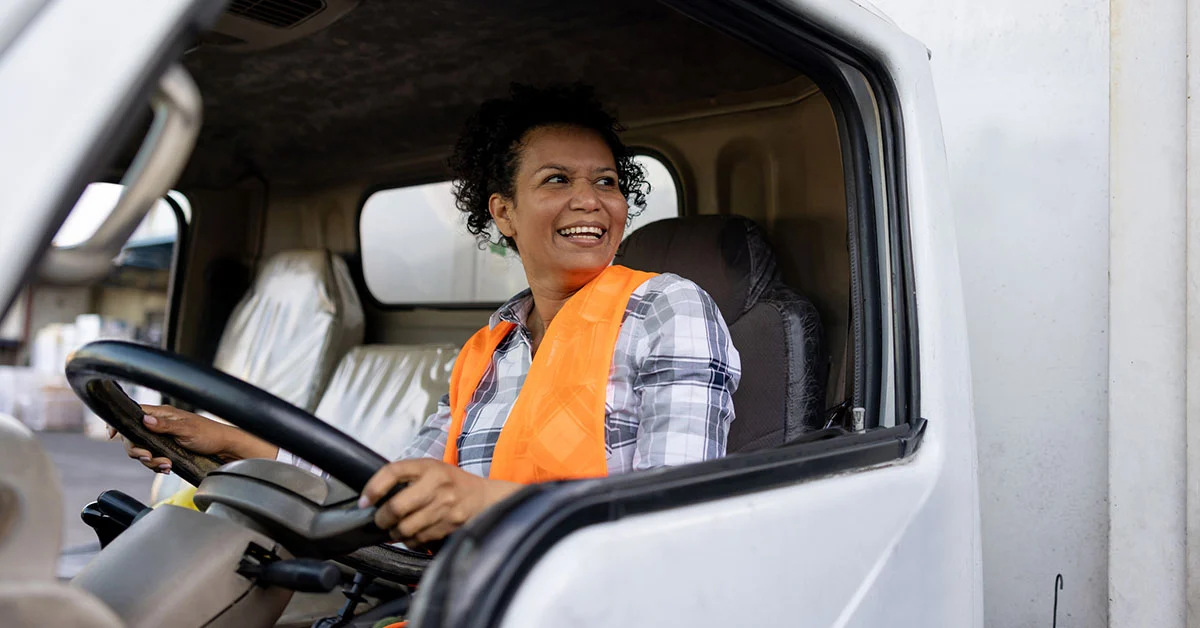
Earning potential: First-year drivers can earn $45,000–$65,000. Experienced drivers make $70,000–$90,000+. Owner-operators can earn six figures.
Flexibility: Local, regional, or over-the-road (OTR). Day shift, night shift, or dedicated routes.
Job security: As long as people need food, medicine, and supplies, truck drivers will be needed.
If you're searching for i need a truck driver opportunities (because you want to drive, not hire), you're in the right place.
Part 2: What You Need to Know Before You Start CDL Classes
Before you sign up for classes to get your cdl, make sure you meet the basic requirements:
Age: 18 for intrastate (driving only within your state). 21 for interstate (crossing state lines, which most jobs require).
Driver's license: A valid state driver's license (non-CDL) for at least 1 year (some schools require 2 years).
Medical: Pass a DOT physical exam (vision, hearing, blood pressure, general health). No untreated sleep apnea, epilepsy, or insulin-dependent diabetes (exceptions exist with waivers).
Background: No recent DUIs, felonies, or major driving violations. Each company has its own standards, but a clean record helps.
Drug test: Pass a DOT drug and alcohol screening.
If you have a less-than-perfect record: Don't give up. Some companies and schools accept drivers with older violations (3-5+ years ago). Be upfront about your history when applying.
Part 3: Types of CDL Classes – Which One Is Right for You?
When you search for classes to get your cdl, you'll find three main types of training. Each has pros and cons.
Option 1: Company-Sponsored CDL Training (Free or Low Cost)
Many large trucking companies offer paid training in exchange for a work commitment (usually 6-12 months). You get your CDL for free or very low cost, and you have a job lined up when you finish.
| Company | Program Length | Commitment | Starting Pay (approx.) |
|---|---|---|---|
| Prime Inc. | 4 weeks | 12 months | $0.45–$0.55 per mile |
| Schneider | 3-4 weeks | 9 months | $0.42–$0.50 per mile |
| Swift | 3-4 weeks | 12 months | $0.44–$0.52 per mile |
| CR England | 3-4 weeks | 12 months | $0.42–$0.48 per mile |
| Roehl | 3-4 weeks | 12 months | $0.46–$0.52 per mile |
Pros: No upfront cost, guaranteed job, paid while training (often minimum wage during school).
Cons: Lower pay during commitment period, limited to that company, must stay for agreed term or pay back training costs.
Option 2: Private CDL School (Pay Out of Pocket or Financing)
You pay $3,000–$8,000 for 3-8 weeks of training at an independent school. After passing your CDL exam, you're free to apply anywhere.
Pros: No work commitment, can choose any company, often higher starting pay.
Cons: Upfront cost (financing available), no guaranteed job (though schools help with placement).
Option 3: Community College CDL Program
Many community colleges offer CDL training as a certificate program. Cost: $2,000–$5,000. Length: 8-16 weeks (part-time options available).
Pros: Accredited education, possible financial aid (Pell Grants, student loans), often more thorough training.
Cons: Longer duration, may not include job placement services.
Option 4: On-the-Job Training (for certain endorsements)
Some companies train you on specific equipment (tanker, hazmat, doubles) after you already have a basic CDL. This is not for initial licensing.
Part 4: What You'll Learn in CDL Classes
Whether you choose company-sponsored or private school, classes to get your cdl cover three main areas:
1. Classroom theory (usually 40-80 hours)
Federal Motor Carrier Safety Regulations (FMCSRs)
Hours of Service (HOS) rules (11 hours driving, 14 hours on duty, 10 hours off)
Logbooks (paper and electronic ELD)
Cargo securement
Hazardous materials (if pursuing hazmat endorsement)
Trip planning, maps, and routing
Defensive driving, accident procedures
2. Range driving (practice on a closed course)
Pre-trip inspection (a major part of the CDL exam)
Straight line backing
Offset backing (left and right)
Parallel parking (tractor-trailer)
Alley dock backing
Coupling and uncoupling
3. Road driving (public roads with instructor)
Shifting (10-speed, 13-speed, or automatic)
Turning (wide right turns, button hooks, jug handles)
Highway merging and lane changes
Downhill braking (engine braking, stab braking)
Railroad crossings, weigh stations, inspection stops
Endorsements you can add (extra tests, extra job opportunities):
Hazmat (H): Transport hazardous materials (requires TSA background check)
Tanker (N): Haul liquids (fuel, milk, chemicals)
Doubles/Triples (T): Pull multiple trailers
Passenger (P): Drive buses
School bus (S): Drive school buses
Part 5: How Long Does It Take to Become a Truck Driver?
The fastest path from zero to licensed is 3 weeks (full-time company training). Most people take 4-8 weeks.
| Training Path | Duration | Schedule |
|---|---|---|
| Accelerated private school | 3-4 weeks | Full-time (40+ hours/week) |
| Standard private school | 5-8 weeks | Full-time or part-time |
| Company-sponsored program | 3-4 weeks (plus 1-4 weeks with a trainer after CDL) | Full-time |
| Community college | 8-16 weeks | Part-time (evenings/weekends) |
After you get your CDL: Most new drivers go out with a trainer for 2-6 weeks before driving solo. This is called "over the road training" or "mentorship." You're paid during this time (usually $400–$800 per week).
Part 6: How to Apply to Be a Truck Driver – The Step-by-Step Process
Ready to apply to be a truck driver? Here's the exact process from start to first paycheck.
Step 1: Get your CLP (Commercial Learner's Permit)
Study the CDL manual for your state (free online)
Pass the general knowledge test, air brakes test, and combination vehicles test at your state DMV
Cost: $50–$150 depending on state
Validity: 6 months to 1 year (renewable)
Step 2: Enroll in CDL classes
Choose a training option (company-sponsored, private school, or community college)
Complete classroom, range, and road training
Pass the CDL skills test (pre-trip, backing, road driving) – either at your school (if they are third-party testers) or at the DMV
Step 3: Get your CDL license
Take your CDL skills test (can be done at school or DMV)
Pay licensing fee ($50–$200)
Receive your CDL (may be mailed or printed on the spot)
Step 4: Apply for jobs
Update your resume (include CDL school, endorsements, any driving experience)
Apply to companies directly through their websites or job boards (Indeed, CDLJobsNow, TruckersReport)
Attend trucking job fairs (many are online now)
Step 5: Complete orientation and training
Most companies require 1-2 weeks of orientation (classroom + driving with trainer)
You'll learn company policies, safety procedures, and specific equipment
You'll be paid during orientation (usually $600–$1,000 per week)
Step 6: Start driving solo
After completing training, you'll be assigned a truck and route
First solo trip is often with a mentor riding along for a few days
Then you're on your own!
Part 7: How to Find Companies That Need Truck Drivers Right Now
If you've seen "need truck drivers" signs everywhere, you're not imagining it. The driver shortage is real. Here's how to find companies hiring new CDL holders:
Large carriers that hire new graduates:
Schneider (CDL school graduates welcome)
Swift Transportation (has its own academy)
CR England (company-sponsored training)
Prime Inc. (paid training program)
Roehl Transport (paid CDL training)
Werner Enterprises (new driver program)
Knight Transportation (refresher courses available)
Stevens Transport (specializes in reefer)
Local and regional companies: Search "need cdl driver [your city]" on Google. Many smaller companies prefer local drivers and may offer home-daily positions.
Specialized jobs (higher pay, need experience):
Tanker (fuel, chemicals, milk)
Hazmat (explosives, radioactive, poisonous)
Flatbed (steel, lumber, machinery)
Car hauling
Oversized/overweight loads
Job boards for truck drivers:
Indeed.com (filter by "CDL required")
TruckersReport.com (driver-focused job board)
Craigslist (be careful, but legitimate local jobs are posted)
Part 8: What to Expect in Your First Year as a Truck Driver
Your first year is about learning, building experience, and staying safe. Here's what it looks like:
Pay structure:
Per mile: Most OTR drivers earn $0.40–$0.55 per mile. First year: 100,000–120,000 miles = $40,000–$66,000.
Hourly: Local and some regional jobs pay $20–$28 per hour.
Percentage of load: Some carriers pay 25-30% of the load revenue (better for experienced drivers).
Life on the road:
OTR (Over the road): Out for 2-4 weeks, home for 2-5 days. You live in the truck. Sleep in sleeper berth.
Regional: Out for 5-6 days, home for 2 days. Driving within a few states.
Local: Home daily. Drive 10-12 hour shifts, return to terminal each night.
Typical week for an OTR driver:
Monday: Pick up load, drive 550 miles, park at truck stop
Tuesday: Deliver load, pick up new load, drive 500 miles
Wednesday: Drive, fuel, pre-trip inspection, deliver
Thursday: Pick up, drive, maybe take a 10-hour break
Friday: Deliver final load, head toward home
Saturday/Sunday: Home time (if you're out 2 weeks, you might stay out)
Challenges of first year:
Being away from family
Adjusting to sleeping in a moving truck
Learning to back into tight docks
Dealing with shippers/receivers who treat drivers poorly
Staying healthy (diet, exercise, sleep)
Rewards of first year:
Paychecks that grow with experience
Freedom of the open road
No office politics, no boss looking over your shoulder
Seeing the country
Knowing you're essential to the economy
Part 9: How to Become a Truck Driver with No Experience – Tips for Success
If you're starting from zero, here's how to make yourself a strong candidate even without experience:
Get your endorsements early. A hazmat endorsement (even if you never haul hazmat) makes you more attractive to employers. It shows you're serious. Tanker and doubles/triples endorsements cost little but open doors.
Keep your driving record clean. No speeding tickets, no at-fault accidents, no DUIs. Insurance companies review your MVR (Motor Vehicle Record). Points raise insurance costs for employers.
Pass the drug test the first time. DOT drug tests are strict. Marijuana is still illegal at the federal level, even if legal in your state. Don't risk it.
Be trainable. During orientation and with your trainer, listen more than you talk. Ask questions. Show up early. Stay off your phone.
Start with a mega carrier. Large companies have the resources to train new drivers, offer steady freight, and provide benefits. After 6-12 months, you can move to a smaller company, local job, or specialized carrier for higher pay.
Consider a signing bonus. Many companies offer $1,000–$5,000 for new drivers (paid after 30-90 days). Read the fine print – you may have to stay a certain amount of time to keep it.
Part 10: Common Questions About CDL Classes and Becoming a Truck Driver
How much do CDL classes cost?
Private schools: $3,000–$8,000. Community colleges: $2,000–$5,000. Company-sponsored: $0 (with work commitment). Financing available through schools or third-party lenders.
Can I get my CDL online?
No. CDL training requires in-person driving practice and testing. However, you can study for the written CLP exam online using free practice tests.
How hard is the CDL skills test?
The pre-trip inspection is the hardest part for most students (100+ items to check). Backing maneuvers take practice. The road test is straightforward if you've practiced highway driving with an instructor.
Do I need my own truck to get a CDL?
No. CDL schools provide trucks for training and testing. You cannot use your personal vehicle (unless it's a commercial truck with air brakes).
What if I fail the CDL test?
Most states allow you to retake the skills test after 7-14 days. Some schools offer free retakes; others charge a fee ($50–$200). The written CLP test can be retaken immediately (small fee).
Can I become a truck driver with a DUI?
It depends. A single DUI more than 5-7 years ago may be acceptable to some companies. Recent DUIs (within 3-5 years) are usually disqualifying for interstate driving. Check with specific companies.
How much do truck drivers make in their first year?
$45,000–$65,000 is typical. Regional and local jobs may pay slightly less. OTR with a mega carrier pays $50,000–$60,000. Specialized carriers (tanker, flatbed) may pay $60,000–$70,000.
Part 11: Your Action Plan – From CDL Classes to Your First Driving Job
If you can train full-time (4 week plan):
Week 1: Get your CLP (study CDL manual, take written tests at DMV). Apply to company-sponsored programs or private schools.
Week 2: Start CDL classes – classroom and range driving.
Week 3: Complete range and road training. Practice pre-trip inspection.
Week 4: Pass CDL skills test. Get CDL license. Apply to companies.
Week 5-6: Complete orientation and training with employer.
Week 7: Start driving solo.
If you need to keep working while training (8-12 week plan):
Week 1-2: Study for CLP at home. Take written tests at DMV.
Week 3-10: Enroll in part-time or evening CDL classes at community college.
Week 11: Pass CDL skills test. Get CDL license.
Week 12: Apply to companies that hire new drivers. Start orientation.