A Modern Approach to Tooth Replacement: What You Should Know About Screwless Implants
If you're exploring options for missing teeth, you've likely encountered a range of solutions—some familiar, some more modern. Among the newer approaches gaining attention are screwless dental implants. While traditional implants have been trusted for decades, this alternative design addresses some of the common concerns that come with long-term use. Whether you're looking for a more natural appearance, fewer maintenance issues, or a solution that simply feels more secure, understanding how screwless implants work—and what they cost—can help you make a confident decision.
What Makes Screwless Implants Different?
Traditional dental implants rely on a small screw to attach the replacement tooth to the supporting structure. That tiny screw can occasionally loosen over time, and the small hole left on the crown can affect the look of the tooth. Screwless implants take a different approach.
Instead of using a screw, these systems use either a strong dental cement to bond the crown to the abutment or a precision-engineered friction fit that holds everything together without any hardware. The result is a seamless connection that mimics the natural structure of a tooth more closely. There's no screw to loosen, no access hole to fill, and often a more hygienic seal against bacteria.
For anyone who has lived with the worry of a loose crown or the visible mark left by a screw-retained tooth, this design offers a meaningful shift in how dental restorations can feel and function.
Why This Matters for Long-Term Peace of Mind
One of the most common issues with traditional implants is that over years of chewing, the small screw holding the crown can loosen. It’s usually a simple fix—your dentist tightens it—but it still means an extra appointment and a reminder that something in your mouth isn’t as stable as it should be. Screwless implants eliminate that entirely. Without that screw, there’s nothing to loosen. That simplicity brings a level of reliability that many people find reassuring.
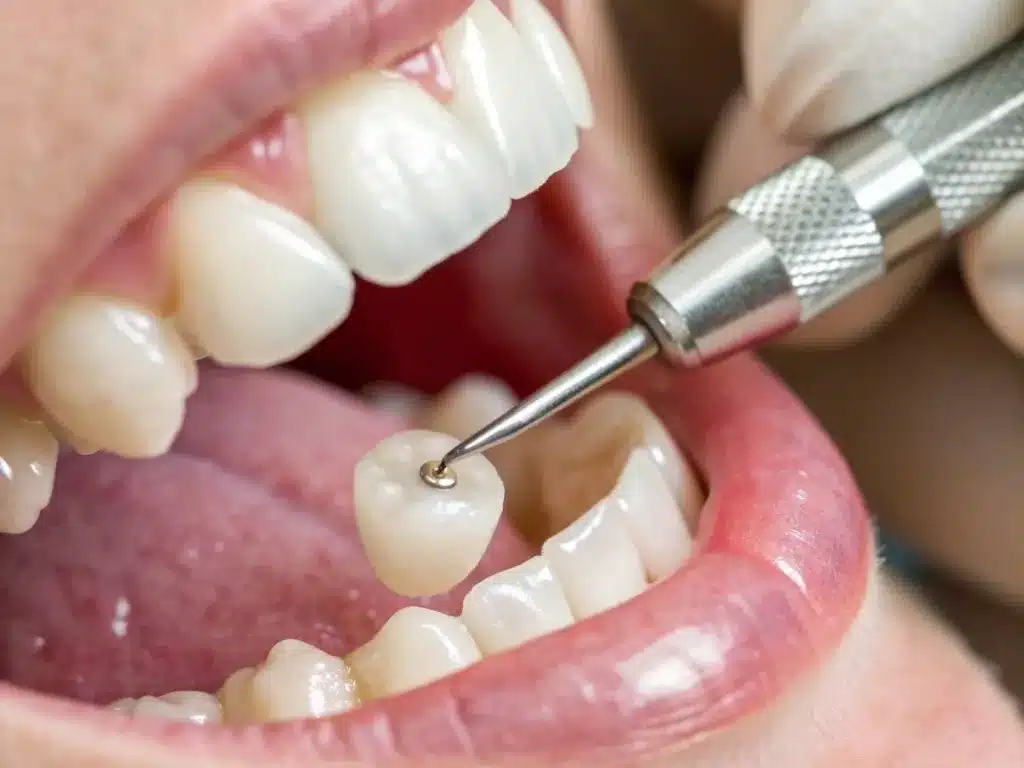
There’s also the question of cleaning. Any time two components meet, there’s a potential space for bacteria to hide. Traditional implants have a small gap between the abutment and the crown. Screwless systems, especially press-fit designs, create a seal that makes it harder for bacteria to accumulate. For anyone focused on long-term gum health, that’s a significant advantage.
The Aesthetic Difference You May Notice
If the missing tooth is visible when you smile, how the restoration looks matters. Traditional screw-retained crowns have a tiny hole on the surface where the screw is placed. That hole is filled with material, but over time, the filling can stain or become noticeable. Screwless implants have no such hole. The crown is a solid piece of porcelain or ceramic, without any visible interruption. The result is a tooth that looks more like a natural tooth, even on close inspection.
For many people, especially those replacing front teeth or teeth visible in their smile, this cosmetic benefit is one of the reasons they choose screwless over traditional designs.
How Much Do Screwless Implants Cost?
The cost of a dental implant in the U.S. is rarely a single number. A screwless implant is no exception. The total price typically ranges from $3,500 to $6,500 for a single tooth, though that range depends heavily on several factors.
Surgical placement makes up a significant portion of the cost. This covers the procedure to place the implant post into the jawbone, which requires skill and precision. Fees for this part of the process generally range from $1,500 to $3,000.
The components—the implant itself and the abutment—add another $1,000 to $2,000. High-quality systems from reputable manufacturers cost more, but they also come with decades of clinical data showing their reliability.
The crown is the visible part of the tooth. Depending on the material (porcelain, zirconia, or others), fabrication by a dental lab and placement by your dentist typically add $1,000 to $2,500.
What often surprises people are the preparatory procedures. Not everyone is ready for an implant on their first visit. If a tooth needs to be extracted, that adds $200 to $600. If the jawbone has lost density over time—common after tooth loss—a bone graft may be necessary to create a solid foundation. That can add $400 to $2,000 or more. CT scans for precise planning add another $250 to $750.
| Cost Component | Typical Range |
|---|---|
| Surgical placement | $1,500–$3,000 |
| Implant + abutment components | $1,000–$2,000 |
| Crown fabrication and placement | $1,000–$2,500 |
| Tooth extraction (if needed) | $200–$600 |
| Bone grafting (if needed) | $400–$2,000+ |
| CT scan / 3D imaging | $250–$750 |
What Affects Your Final Price
Where you live matters. In major metropolitan areas, fees tend to be higher than in smaller towns. The experience of your provider also plays a role. A specialist like a periodontist or oral surgeon may charge more than a general dentist, but their experience can mean a smoother process and better outcomes.
Insurance coverage varies widely. Some plans cover part of the crown, but few cover the entire procedure. A pre-authorization from your insurance company before starting can help you understand what you’ll actually pay out of pocket.
The long-term picture is worth considering too. While the upfront cost is significant, avoiding future repairs for loose screws and maintaining better gum health can make screwless implants a cost-effective choice over a lifetime.
Common Questions About Screwless Implants
Is the procedure painful?
The implant placement is done with local anesthesia, so you won’t feel pain during the procedure. Afterward, most people describe mild soreness, similar to having a tooth extracted. Over-the-counter pain relief usually handles it well.
How long do they last?
The implant itself, once fused with the bone, is designed to last a lifetime. The crown may eventually need replacement after 15 to 25 years due to normal wear, but the underlying implant remains stable.
Am I a good candidate?
Candidates need sufficient jawbone density and good overall health. A consultation with a specialist, including a 3D CT scan, is the only way to know for sure. Even if you’ve been told in the past that you weren’t a candidate, advances in bone grafting and implant design mean more people qualify today than before.
What to Consider Before Making a Decision
Dental implants—whether screw-retained or screwless—are a long-term investment in your health and quality of life. The decision isn’t just about the cost of the procedure today, but about what kind of experience you want decades from now. If you value a seamless appearance, reduced risk of hardware issues, and a design that’s easier to keep clean, screwless implants are worth a closer look.
Start with a consultation. Ask about the specific system the practice uses. Understand what’s included in the quoted price and what might be extra. A good provider will walk you through the entire process, from imaging to final placement, and help you see the difference between a quick fix and a solution built to last.