
Some ETFs compete on price — but fees shouldn’t always ‘drive the investment decision,’ analyst says
Exchange-Traded Funds (ETFs) have revolutionized investing by offering low-cost access to diversified portfolios, with assets under management soaring to over $13 trillion. While the expense ratio—the annual fee expressed as a percentage of assets—is a critical starting point, experts warn that selecting the cheapest fund tracking a given index can be a mistake. A nuanced evaluation of structure, liquidity, and strategy is essential for optimal portfolio construction.

"The lower the expense ratio, the less the impact on your investment gains," emphasized Dan Sotiroff, a senior analyst at Morningstar. This is paramount for long-term wealth building, as fees directly erode compounding returns. However, Sotiroff and other advisors stress that several other factors warrant close attention. A myopic focus on cost alone can lead to unintended risks and subpar performance.
The Case for Provider Consistency and Liquidity Assessment
One often-overlooked consideration is the benefit of sticking with a single ETF provider for complementary exposures. Sotiroff explains that different providers may use slightly different methodologies to define market segments like "large-cap" or "small-cap." Mixing providers can result in unintended over- or underweighting of certain stocks, distorting the intended risk/return profile of a portfolio. "As a general rule, investors should stick with one provider," he advises.
Liquidity is another practical concern. Kyle Playford, a certified financial planner, recommends assessing the bid-ask spread and average daily trading volume. "Look for spreads of only a few cents," he said, noting that wider spreads indicate lower liquidity and higher trading costs. A fund with high trading volume is generally easier to buy and sell efficiently.
Active vs. Passive: Weighing Cost Against Potential Outperformance
Finally, investors should reconsider the automatic preference for passive, index-tracking ETFs. In certain market segments, actively managed ETFs can justify their higher fees through sustained outperformance. Playford points to examples in emerging markets and small-cap equities, where skilled managers navigating volatile conditions have historically added value beyond their cost. "It is more expensive, but over the long run, you can have an outperformance with active stock picking," he noted, suggesting that a slightly higher expense ratio can be a worthwhile investment for superior risk-adjusted returns.
The decision ultimately balances cost efficiency with strategic precision. For core, broad-market exposure, the lowest-cost passive ETF is often the best choice. But for satellite holdings or niche exposures, factors like provider alignment, trading liquidity, and the potential for active management to add alpha become equally important components of the selection process.
Recent
News




Newsletter
Subscribe to our mailing list to get the new updates!

Subscribe our newsletter to stay updated
Most
Reviews
More News
Economy

Finance
Markets
- Mon, 19 Jan 2026
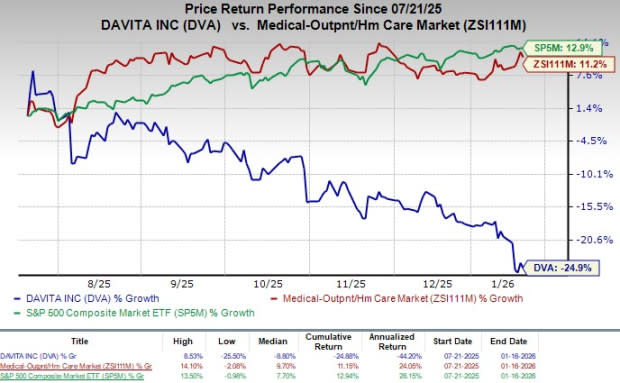
Here's Why You Should Hold DaVita Stock in Your Portfolio for Now
Markets