
Frontier Airlines replaces longtime CEO Barry Biffle with carrier’s president
Frontier Group Holdings, the parent company of ultra-low-cost carrier Frontier Airlines, announced an immediate leadership change on Monday, replacing CEO Barry Biffle with company President James Dempsey. The abrupt shift at the top comes as the budget airline grapples with steep financial losses and a sharply declining stock price.
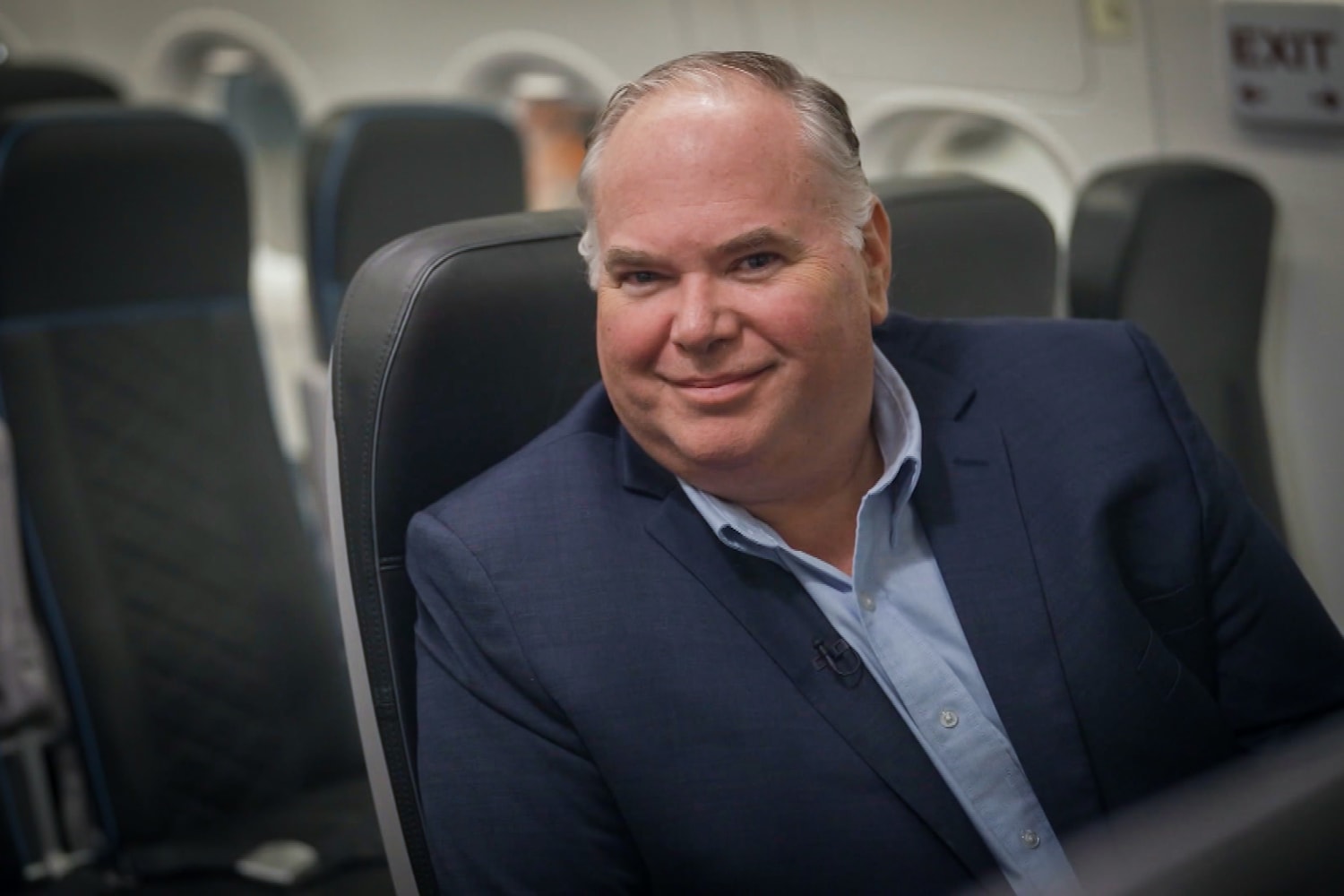
Biffle, who had led Frontier since 2016 and has a decades-long career in the budget airline sector including at Spirit Airlines, will remain in an advisory role until year-end. Board Chair Bill Franke stated that Dempsey, a 10-year veteran of Frontier's leadership team, is "uniquely qualified to guide our airline into the future." The market reacted negatively to the news, with Frontier's shares dropping 11% in morning trading following the announcement.
Financial Strain and a Challenging Market Landscape
The leadership transition underscores the intense pressure on smaller budget carriers. Frontier reported a net loss of $190 million for the first nine months of the year, a stark reversal from a $31 million profit during the same period a year earlier. The airline's shares have fallen nearly 19% this year, significantly underperforming the broader airline index.
The sector faces a confluence of challenges: elevated labor and operational costs, shifting consumer preference toward international travel and premium seats, and an oversupply of domestic flight capacity. These headwinds have made it difficult for ultra-low-cost models to maintain consistent profitability in the post-pandemic landscape. Frontier's struggles mirror those of its rival Spirit Airlines, which is currently navigating its second bankruptcy in less than a year and recently secured an additional $100 million in emergency funding.
Strategic Uncertainty and the Path Forward
Dempsey assumes leadership at a critical juncture. Frontier has explored a merger with Spirit Airlines multiple times since 2022, but no deal has materialized. In the interim, the airline under Biffle had initiated efforts to attract customers by offering more spacious seating options, a move away from its pure ultra-low-cost focus. The new CEO's immediate task will be to stabilize operations, address the mounting losses, and define a clear strategic path—whether as a standalone carrier pursuing a niche or as a potential consolidation partner—in an increasingly unforgiving market.
Recent
News




Newsletter
Subscribe to our mailing list to get the new updates!

Subscribe our newsletter to stay updated
Most
Reviews
Business

Finance

Finance
- Thu, 15 Jan 2026
London learned the hard way. Is California next?
Economy