
Pfizer adds to obesity bet with up to $2.1 billion deal to develop Chinese company’s pill

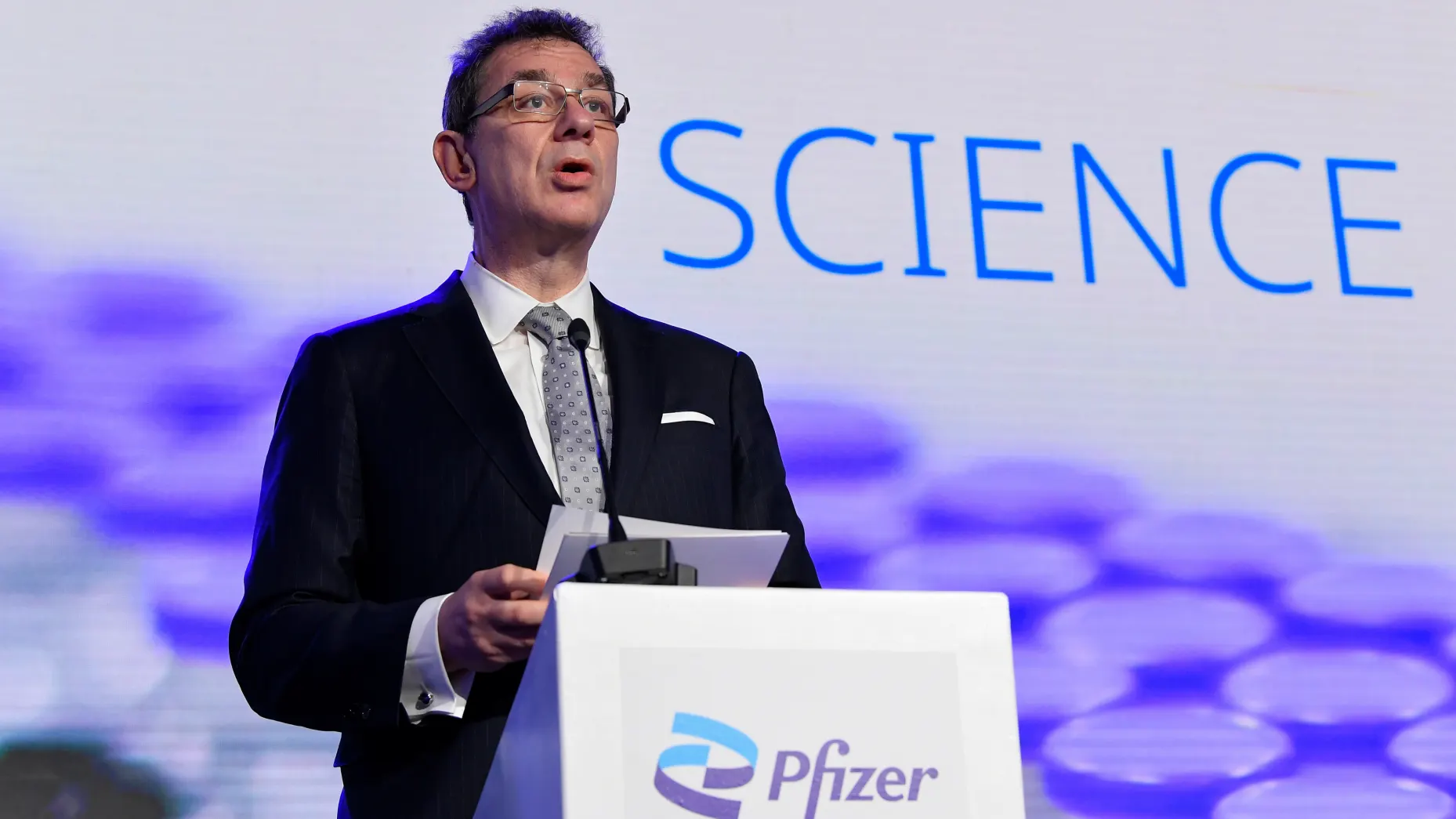
Pfizer CEO Albert Bourla talks during a press conference with European Commission President Ursula von der Leyen after a visit to oversee the production of the Pfizer-BioNtech COVID-19 vaccine at the factory of U.S.
New York — In a strategic move to bolster its position in the lucrative obesity drug market, Pfizer has entered an up to $2.1 billion licensing agreement with China's YaoPharma. The deal grants Pfizer rights to develop and commercialize YaoPharma's experimental GLP-1 pill, marking the latest escalation in the pharmaceutical giant's campaign to diversify its pipeline after several high-profile setbacks.
Under the agreement, Pfizer will pay Shanghai Fosun Pharmaceutical subsidiary YaoPharma $150 million upfront, with the potential for nearly $2 billion in additional milestone payments and future royalties.
A High-Stakes Play for a Diversified Portfolio
YaoPharma's drug, YP05002, is an oral medication that targets the GLP-1 hormone, similar to Novo Nordisk's blockbuster injection Wegovy. However, the asset is still in early-stage development, meaning it will not reach the market for several years. The agreement tasks YaoPharma with conducting initial Phase 1 trials, after which Pfizer will assume control of later-stage development.
Analysts view the deal as a prudent step for Pfizer to build a more robust and varied obesity portfolio. "We view obesity diversification as promising in the short term," noted BMO Capital Markets analyst Evan Seigerman, adding that the modest upfront payment reflects "prudent capital conservation" following the costly Metsera acquisition. Pfizer plans to study combining YaoPharma's GLP-1 pill with its own experimental drug targeting the GIP receptor, mimicking the dual-action approach of Eli Lilly's highly successful Zepbound.
Navigating a Crowded and Competitive Arena
The agreement underscores the intense high-stakes race among pharmaceutical titans to capture a share of the obesity market, which some analysts project could be worth $100 billion by the 2030s. For Pfizer, this partnership is part of a critical effort to recover from prior failures, including the discontinuation of two other obesity pill candidates in recent years.
Success in this arena requires navigating a complex competitive ecosystem of scientific innovation, pricing pressures, and manufacturing scale. The move to license an oral therapy also highlights the industry's focus on developing more convenient alternatives to current injectable treatments, a key strategic maneuver for broader patient adoption.
The Long Road to Market
While the financial commitment is significant, the path to commercialization remains long. With limited public data available on YP05002's efficacy and safety profile, Pfizer is making a forward-looking bet on an unproven asset. The company's ability to efficiently advance this candidate through clinical trials and ultimately to patients will be a major test of its renewed strategy in the metabolic disease space.
The deal signals that Pfizer is willing to invest heavily and explore multiple avenues—from acquisitions to international partnerships—to ensure it is not left behind in one of healthcare's most transformative and profitable markets in decades.
Recent
News



Newsletter
Subscribe to our mailing list to get the new updates!

Subscribe our newsletter to stay updated
Most
Reviews
Invest
Finance
- Mon, 26 Jan 2026
Nvidia invests $2bn in CoreWeave in new data centre push
Markets

Politics

Markets