
Bill Gates on why AI will become ‘hyper competitive’

Bill Gates talks to CNBC at Abu Dhabi Finance Week.
Abu Dhabi — Microsoft co-founder and philanthropist Bill Gates has issued a sobering assessment of the current artificial intelligence boom, cautioning that a significant number of highly valued AI companies will not survive the impending industry shakeout. Speaking at Abu Dhabi Finance Week, Gates acknowledged market "jitters" but reaffirmed his unwavering belief in AI's transformative power.
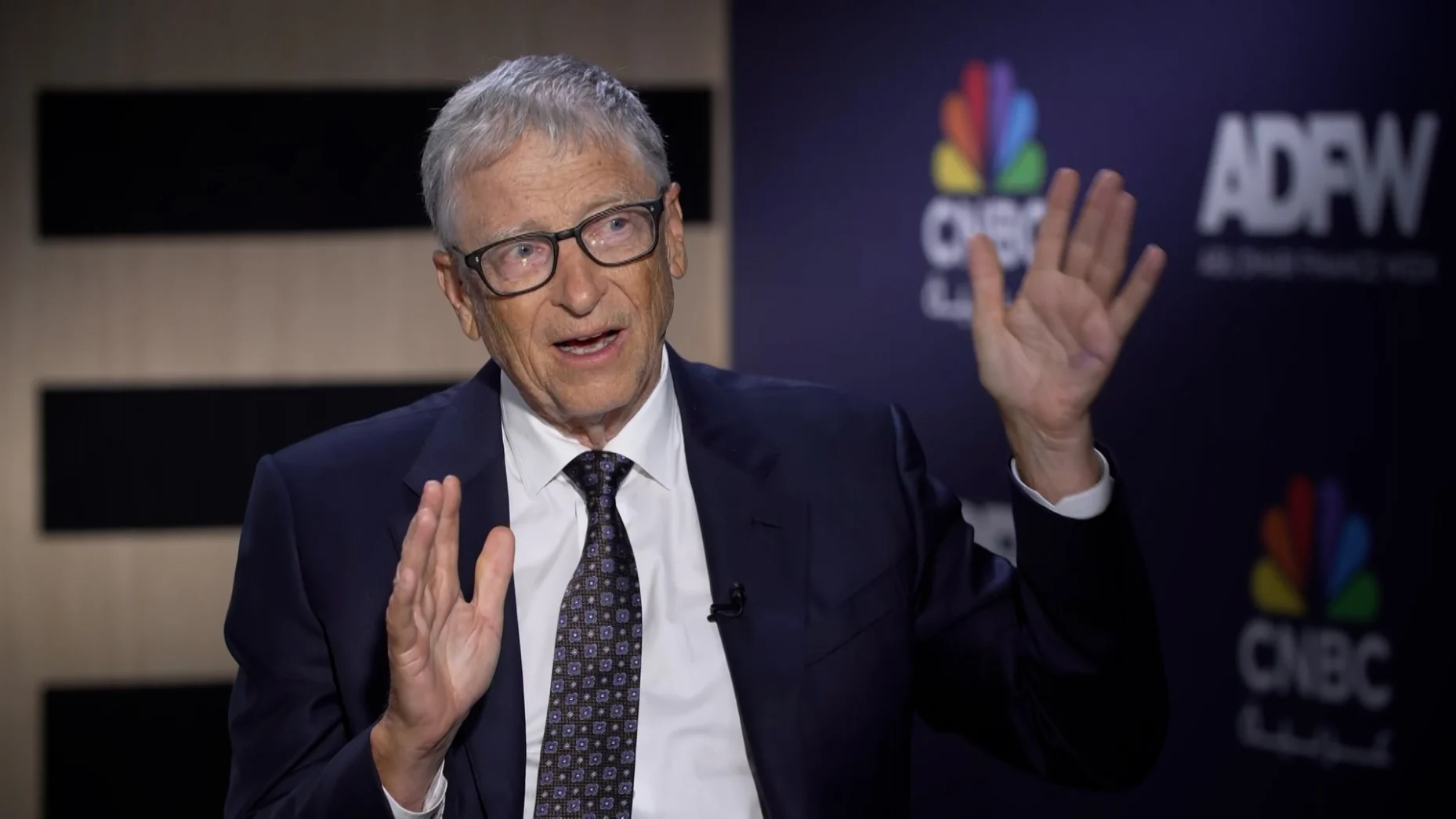
"AI is the most important thing going on... There’s not the slightest doubt about that," Gates told CNBC. However, he drew a sharp distinction between the technology's profound potential and the sustainability of current market exuberance. "Does it mean all of these companies with high valuations will be winners? No, it’s going to be hyper competitive."
A Call for Discernment Amidst "Frothiness"
Gates' comments directly address growing investor anxiety over soaring capital expenditures and circular deal-making that have fueled fears of a bubble. He pointed to extreme valuations, such as the price-to-earnings ratios of companies like Palantir and Tesla exceeding 200, compared to the S&P 500 average of about 25.
Despite this warning, Gates emphasized that the underlying technology is not a fad. "AI is only a bubble in the sense that not all of these valuations will end up going up... It is a deeply profound technology that will reshape the world."
Focus on Tangible Societal Impact
Beyond market dynamics, Gates outlined a concrete vision for AI's near-term benefits, particularly in global health and agriculture. Following a recent $1.9 billion pledge from the Gates Foundation and partners to fight polio, he predicted 2026 would be a pivotal year for deploying AI tools in the field.
He highlighted pilot projects such as a "virtual doctor" capable of supporting African dialects and an AI "farm advisor" designed to dramatically raise productivity for small-scale farmers across the continent. This focus on applied, mission-driven AI represents a critical high-stakes race to deliver measurable improvements in quality of life, contrasting with more speculative commercial applications.
Navigating the Coming Consolidation
Gates' dual perspective—bullish on the technology, bearish on many of its commercial vehicles—serves as a guide for navigating the coming competitive ecosystem. The industry is poised for a period of intense competition and consolidation, where success will depend not just on technological prowess but on viable business models and real-world utility.
The message to investors and entrepreneurs is clear: the AI revolution is real, but the path will be fraught with volatility. Separating substantive, scalable innovations from overhyped ventures will be the key strategic maneuver in the years ahead, as the market matures and begins to separate the eventual winners from the losers.
Recent
News




Newsletter
Subscribe to our mailing list to get the new updates!

Subscribe our newsletter to stay updated
Most
Reviews
Banner

Business

Economy

- Mon, 26 Jan 2026
EUR/USD climbs toward 1.1870 as Dollar sinks on geopolitical jitters
Markets

Analysis