
Behind the mesh curtain: Why airline class wars will intensify in 2026

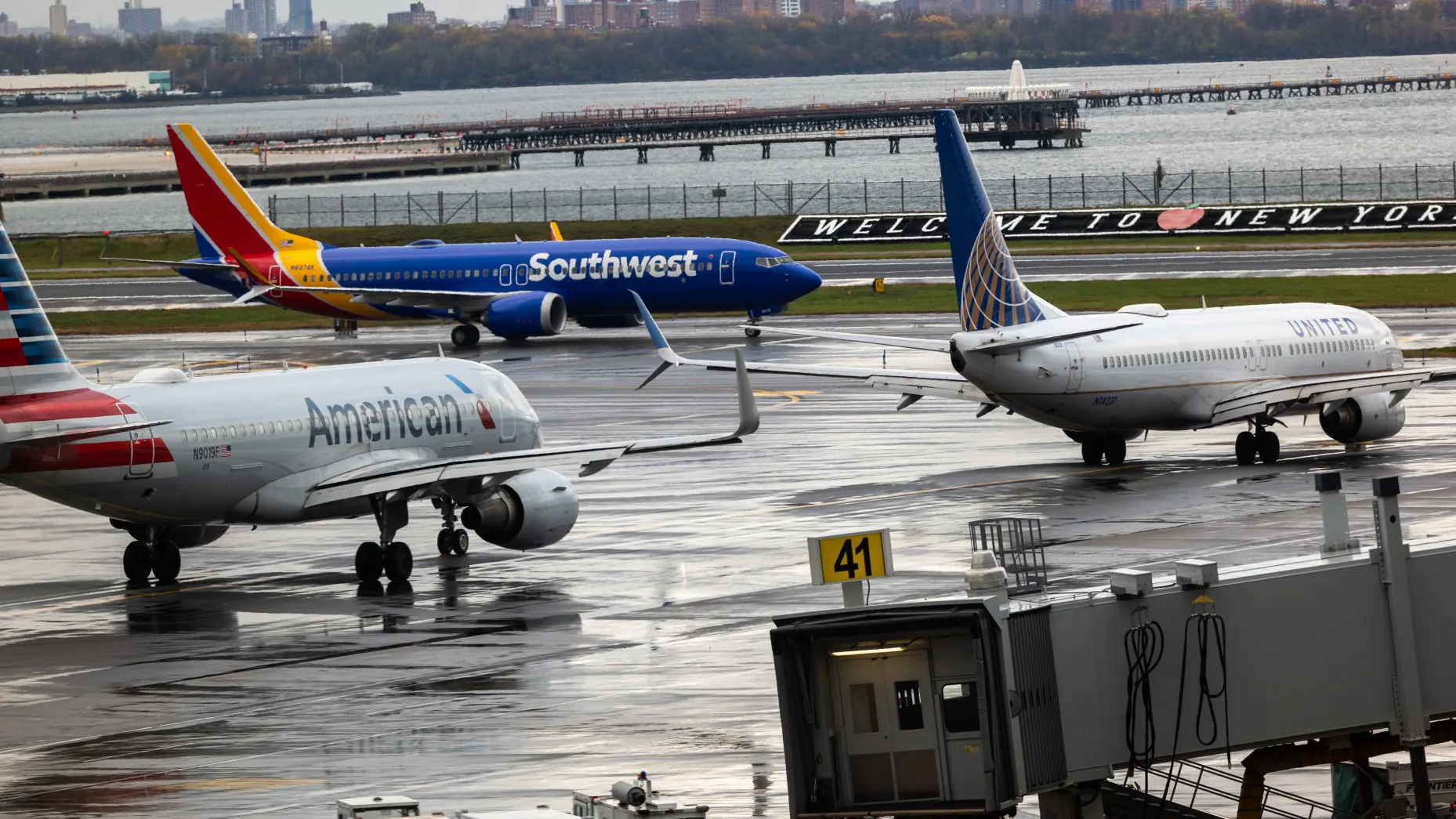
Planes line up on the tarmac at LaGuardia Airport on November 10, 2025 in New York City.
New York — The U.S. airline industry is preparing for a year of intensified stratification in 2026, as carriers double down on premium offerings to capture wealthy travelers while budget operators fight for survival. This "K-shaped" divergence comes after a 2025 that fell short of record profit hopes due to trade war anxieties, skittish demand, and an oversupply of domestic seats.
"It’s the airline version of the K-shaped economy. Monetize the top of the K and minimize the shortfall at the bottom," said aviation consultant Robert Mann. Major airlines are now laser-focused on extracting more revenue from customers willing to pay for extra space, lounge access, and other perks, against a backdrop of persistent operational challenges like air traffic controller shortages.
The Great Divide: Premium Profits vs. Budget Battles
The profit chasm is stark. Through the first three quarters of 2025, Delta and United accounted for nearly all industry earnings, a trend expected to solidify. These network carriers are aggressively expanding premium cabins and lounges. American Airlines, aiming to catch up, is launching new long-haul planes, rolling out free Wi-Fi for loyalists, and revamping its Dallas hub.
Conversely, the low-cost segment is in turmoil. Spirit Airlines is in its second bankruptcy in under a year, with analysts doubting its future as a standalone company. "We do not expect it to remain a standalone company this time next year," noted Raymond James, suggesting a merger or liquidation is likely. Fellow budget carrier Frontier is seen as a potential suitor.

The view into American Airlines first-class cabin on a Boeing 737.
Transformations and Steady Fares
Amid this split, historic transformations are underway. Southwest Airlines, whose stock outperformed peers in 2025, is abandoning its signature open seating in January, introducing assigned seats alongside new fees for checked bags and extra legroom—a profound strategic pivot toward a more traditional, segmented model.
Despite the shifts, airfares are forecast to remain stable in 2026. However, demand remains a question mark, with Southwest CEO Bob Jordan noting the first quarter "looks strong" but the full-year outlook is unclear. Reliability remains a universal pain point; a 77% on-time arrival rate in 2025 means "it doesn’t matter if you’re at the top of the K or the bottom," Mann stressed.
Navigating a High-Stakes, Two-Tiered Future
The industry is thus navigating a dual high-stakes race. At the top, carriers are competing on luxury and loyalty in a fierce competitive ecosystem. At the bottom, it's a battle for efficiency and viability. For mid-tier and legacy carriers like American, the year will test their ability to execute a successful strategic maneuver to climb into the profitable premium tier while managing massive operational scales and debt.
The outcome will define not just which airlines thrive, but the very structure of domestic air travel, cementing a system where the in-flight experience—and path to profitability—increasingly depends on which end of the "K" a passenger can afford.
Recent
News





Newsletter
Subscribe to our mailing list to get the new updates!

Subscribe our newsletter to stay updated
Most
Reviews
Markets

Finance

Finance

Politics

Business