
Here’s what to expect for commercial real estate in 2026
New York — The U.S. commercial real estate (CRE) sector is approaching 2026 with a sense of cautious optimism, seeking a "new equilibrium" after a year defined by economic headwinds, shifting policy, and a slow but discernible thaw in capital markets. While sentiment has cooled slightly from a year ago, major forecasts point to stabilizing fundamentals, renewed investment activity, and specific bright spots driven by artificial intelligence and demographic shifts.
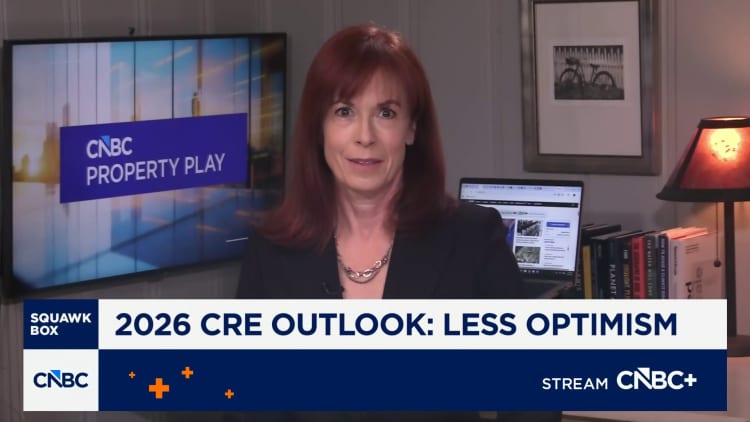
According to Deloitte's survey of 850 global CRE leaders, 83% expect revenues to improve by the end of 2026—a dip from 88% last year—with most anticipating higher costs but a lower cost of capital. "If 2025 was a test of resilience, 2026 has real potential to reward it," said Cushman & Wakefield's chief economist, Kevin Thorpe, summarizing the industry's strategic pivot from survival to measured growth.
Capital Markets Reawaken with Selectivity
A key theme for 2026 is the selective return of capital. Firms like Colliers forecast a 15-20% increase in sales volume as institutional and cross-border investors re-enter a market where prices have largely reset. CoStar data shows deal activity already picking up, with Q3 2025 sales volume rising over 40% year-over-year and banks easing back into lending. The narrowing spread between government and corporate bond yields signals a broader appetite for risk, typically a precursor to firmer real estate investment—a promising sign in the ongoing high-stakes race for yield.
However, this revival is not uniform. PwC notes capital is flowing "but selectively," rewarding data-driven insight. Investor surveys reveal weakened sentiment in multifamily and a general preference to hold current exposure, citing elevated rates and economic uncertainty.
Sector Divergence: AI Drives Demand, While Retail and Multifamily Navigate Shifts
The outlook varies sharply by property type, highlighting a fragmented competitive ecosystem:
Office: Widely considered to have bottomed, the sector shows early price stability. A historic low in construction and a sustained "flight to quality" are tightening supply for top-tier spaces, especially in tech and AI hubs like San Francisco and Austin.
Industrial & Data Centers: These are clear leaders, fueled by AI expansion, reshoring, and data storage demand. Construction has plummeted, but net absorption is projected to surge. Data centers face their own strategic maneuver against local zoning and grid capacity headwinds.
Retail: Undergoing a structural shift toward smaller footprints in mixed-use, walkable environments. However, significant uncertainty remains as potential tariff-related price hikes threaten to strain consumer spending further.
Multifamily: A record supply pipeline is easing rent growth, making it a more balanced market for tenants but a cautious one for investors.
REITs and the Convergence of Public and Private Values
Public real estate investment trusts (REITs), laggards in 2025, are poised for a potential rebound. Analysts point to a significant valuation gap between public REIT stocks and private market pricing, which is expected to close, potentially driving outperformance. This may also accelerate mergers and acquisitions as the industry seeks scale and efficiency.
Overall, 2026 is set to be a year of execution and selectivity, where clarity in leasing fundamentals and strategic capital deployment will separate winners in a market that is stabilizing but far from uniform in its recovery.
Recent
News




Newsletter
Subscribe to our mailing list to get the new updates!

Subscribe our newsletter to stay updated
Most
Reviews
Finance

- Sat, 24 Jan 2026
Zurich’s £8bn bid for insurer Beazley produces some spurious claims
Markets
- Sun, 25 Jan 2026
These International ETFs Can Add Unique Diversity to Your Portfolio
Finance

Finance

- Sat, 17 Jan 2026
How much does the ‘single tax’ hurt your investments?
Finance