
Why buying Berkshire was Warren Buffett’s biggest mistake
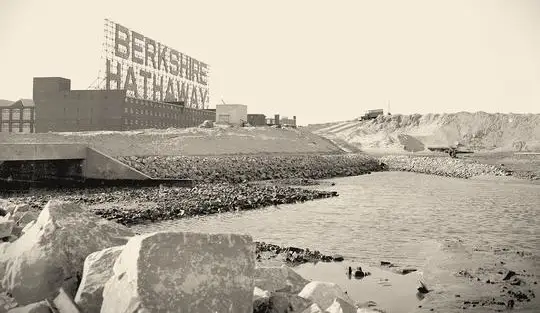
In a revealing archival interview, Warren Buffett labeled his acquisition of Berkshire Hathaway the "dumbest stock I ever bought"—a mistake he says cost the conglomerate roughly $200 billion in forgone value. As he prepares to step down as CEO after six decades, the billionaire investor reflected on the lesson that shaped his legendary career: "If you get in a lousy business, get out of it."
Buffett explained that in 1964, he began buying shares of the struggling textile company expecting to tender them at $11.50 after a mill closure. When the tender offer arrived at $11.375—an eighth less—he felt "chiseled" and angrily bought control instead. "That made me mad. So I went out and started buying the stock, and I bought control of the company, and fired Mr. Stanton," he recalled.
The $200 Billion Anchor
That emotional decision committed Buffett to a declining industry for two decades. "I had now committed a major amount of money to a terrible business," he said. The textile assets became an "anchor" that dragged on capital that could have been deployed into productive ventures like insurance. "If we just started out with the insurance company, Berkshire would be worth twice as much as it is now," Buffett estimated.
The Core Lesson: Quality Over Cheapness
The experience fundamentally shifted Buffett’s philosophy from seeking "cheap" assets—a principle learned from his mentor Ben Graham—to prioritizing quality businesses at fair prices. "It’s much better to buy something that’s good at a fair price, than something that is cheap at a bargain price," he said. This insight underpins his famous adage: "When a manager with a reputation for brilliance meets a business with a reputation for bad economics, it’s the reputation of the business that remains intact."
Buffett also dismissed the "degree of difficulty" concept in business: "You don’t get any extra points for the fact that something’s very hard to do. So you might as well just step over one-foot bars instead of trying to jump over seven-foot bars."
A Legacy of Patience and Selectivity
Despite the early misstep, Buffett’s patience and focus on durable advantages built Berkshire into a $1 trillion conglomerate. His approach—retaining "so-so" businesses rather than engaging in "gin rummy management"—reflects a long-term stewardship mentality. As he passes leadership, the Berkshire Hathaway story remains a masterclass in learning from costly errors and the discipline of capital allocation.
Recent
News



Newsletter
Subscribe to our mailing list to get the new updates!

Subscribe our newsletter to stay updated
Most
Reviews

Finance
Markets

Finance

Markets
- Tue, 20 Jan 2026