China slaps tariffs of up to 42.7% on EU dairy products, alleging ‘damage’ to the domestic dairy industry
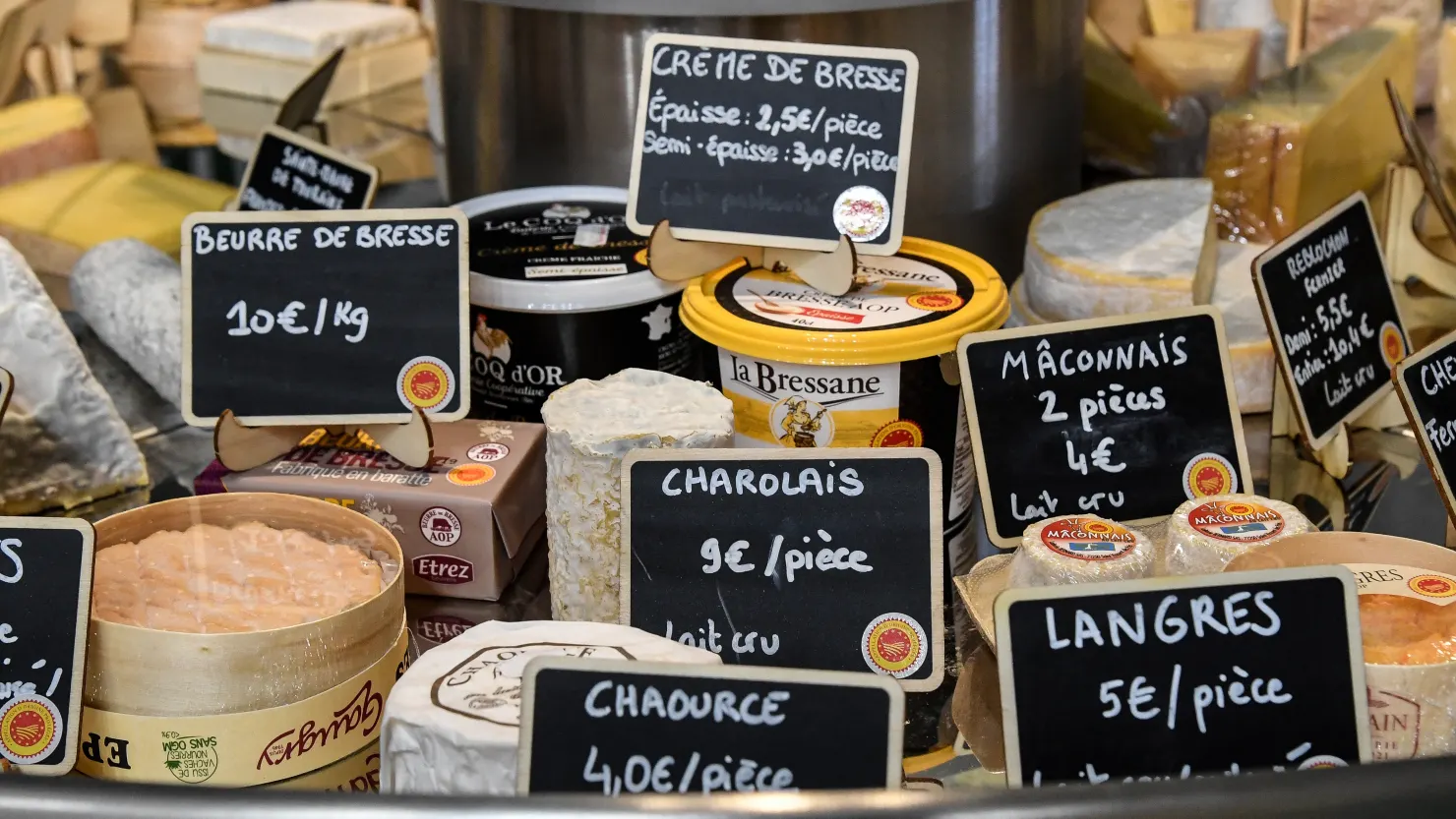
French cheeses displayed in a store in Paris.
China announced on Monday it will impose tariffs as high as 42.7% on dairy imports from the European Union, marking a new escalation in trade tensions between the two economic powers. The duties, set to take effect December 23, follow an anti-subsidy investigation launched in August and target products including fresh and processed cheeses, blue cheese, milk, and cream.
In a statement, China’s Ministry of Commerce said EU subsidies for dairy had caused “substantial damage” to domestic Chinese producers. Companies that cooperated with the probe will face a 28.6% levy, while non-cooperative firms will be subject to the full 42.7% rate.
A Tit-for-Tat Trade Dynamic
The move is widely seen as a retaliatory step after the EU imposed tariffs up to 45% on Chinese electric vehicles in October 2023. Tensions further intensified in November when Brussels challenged China’s tariffs on EU brandy at the World Trade Organization, calling them “unjustified and unwarranted.”
An EU spokesperson described the latest dairy duties as similarly “unjustified and unwarranted,” according to Reuters, adding that the European Commission would formally respond to Chinese authorities.
Strategic Timing Amid Earlier Concessions
Notably, the dairy tariffs come just days after China significantly reduced duties on EU pork imports—lowering rates from temporary anti-dumping levies as high as 62.4% to a range of 4.9% to 19.8%. This mixed signaling suggests Beijing is employing a calibrated, sector-specific approach to trade pressure, easing tensions in one area while tightening them in another.
The strategy reflects China’s broader aim to balance economic retaliation with selective de-escalation, all while defending its domestic industries against what it views as unfair subsidy practices. For European dairy exporters—especially producers of premium goods like France’s Roquefort cheese—the new tariffs could significantly erode price competitiveness in a key growth market.
As both sides navigate an increasingly contentious trade landscape, the dairy duties underscore how geopolitical friction continues to reshape global supply chains and market access, with agricultural and food sectors often caught in the crossfire.