European leaders on Monday emphasized that the war in Ukraine has reached a "critical moment" as President Volodymyr Zelenskyy prepared to share a revised peace proposal with the United States. The urgent meetings in London and Brussels highlighted Europe's scramble to fortify Ukraine's position amid shifting diplomatic dynamics and growing international pressure for a settlement.
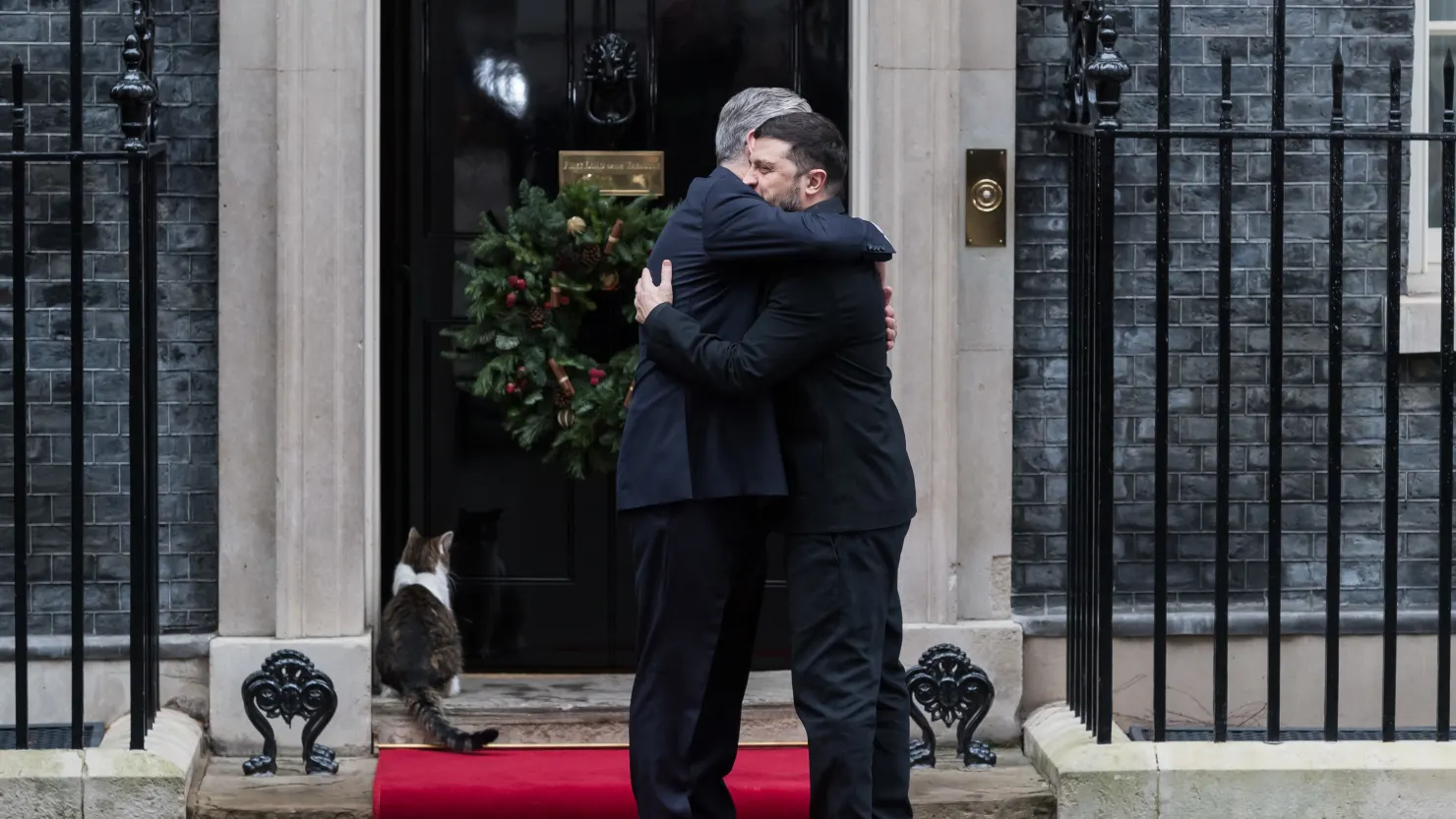
Following talks with UK Prime Minister Keir Starmer, German Chancellor Friedrich Merz, and French President Emmanuel Macron, Zelenskyy stressed the indispensable role of both transatlantic partners. "There are some things which we can’t manage without the Americans, some things we can’t manage without Europe," he stated, underscoring the need for coordinated decisions on security guarantees and post-war reconstruction.
Securing Ukraine's Future: Assets, Alliances, and Assurance
A key outcome of the meetings was progress on utilizing frozen Russian sovereign assets to support Ukraine. The European Commission has proposed directing cash balances from these immobilized funds toward a "Reparations Loan." Leaders also backed the UK- and France-led initiative to form a "Coalition of the Willing," a potential post-war reassurance force to guarantee Ukraine's security.
"We must continue to ramp up support to Ukraine and economic pressure on Putin to bring an end to this barbaric war," a spokesperson for Starmer's office said, capturing the consensus among European allies.
Cautious Optimism Amid Complex Negotiations
Despite the show of unity, underlying strategic caution was evident. German Chancellor Merz expressed skepticism about some details emerging from U.S.-led talks, stating, "I'm looking forward to hearing from Zelenskyy what the outcome of these talks might be." His remarks reflect European concerns that any peace plan must uphold Ukraine's territorial integrity and long-term security.
Zelenskyy confirmed that a revised 20-point plan, with "obvious anti-Ukrainian points" removed, would be shared with Washington. The negotiations continue to hinge on two intractable issues: territory and security guarantees. As Anna Rosenberg of Amundi Investment Institute noted, "The territory we’re talking about is a critical zone of defense for Ukraine," referring to the heavily fortified Donbas region that Russian President Vladimir Putin has threatened to seize "by force."
The Path Ahead: Guarantees Over Territory
Analysts suggest that security assurances may be the linchpin for any viable agreement. Ukraine is unlikely to concede strategic territory without ironclad guarantees from its Western partners that future aggression will be deterred. "They will only give up on the territory once they feel confident they have security guarantees," Rosenberg explained.
The flurry of diplomacy this week underscores a pivotal phase in the conflict, where military resilience, financial ingenuity using frozen assets, and cohesive allied diplomacy are being tested simultaneously. The outcome will likely shape not only Ukraine's future but also the security architecture of Europe for decades to come.