Power Your Home with the Sun: A Practical Guide to Solar Electricity, Backup Batteries, and Energy Independence
Power Your Home with the Sun: A Practical Guide to Solar Electricity, Backup Batteries, and Energy Independence
Your electric bill arrives. It's higher than last month. Again. You look outside at the sun—free, abundant, shining down on your roof—and wonder: why am I not using this? If you've been searching for electric for home solutions, wondering how to get solar power for your home, or looking into a solar powered backup battery for home, you're not alone. Many American homeowners are considering solar, not only to potentially manage electricity costs but also to have more control over their energy use. This guide covers everything you need to know about home solar systems, from how they work to what they may cost, and how to compare an electric solar system for your house.
Why Home Solar Makes Sense Right Now
Solar has become more widely available to homeowners. Panel prices have changed significantly over the past decade, and federal, state, and local incentives may be available depending on when and where a system is installed. Utility electricity rates also vary by location and over time, so solar may affect a household's long-term electricity costs depending on the system, financing, utility rules, and local rates.
But the considerations go beyond money. Solar power can provide a degree of energy independence. When the grid goes down—during storms, heat waves, or equipment failures—a solar powered backup battery for home may keep selected lights, appliances, or other essential loads operating, depending on system capacity and configuration. For homeowners concerned about reliability, backup power can be one factor to consider when comparing systems.
How Solar Works: From Sunlight to Outlet
A home solar system isn't magic. It's a straightforward assembly of components that work together to convert sunlight into usable electricity.
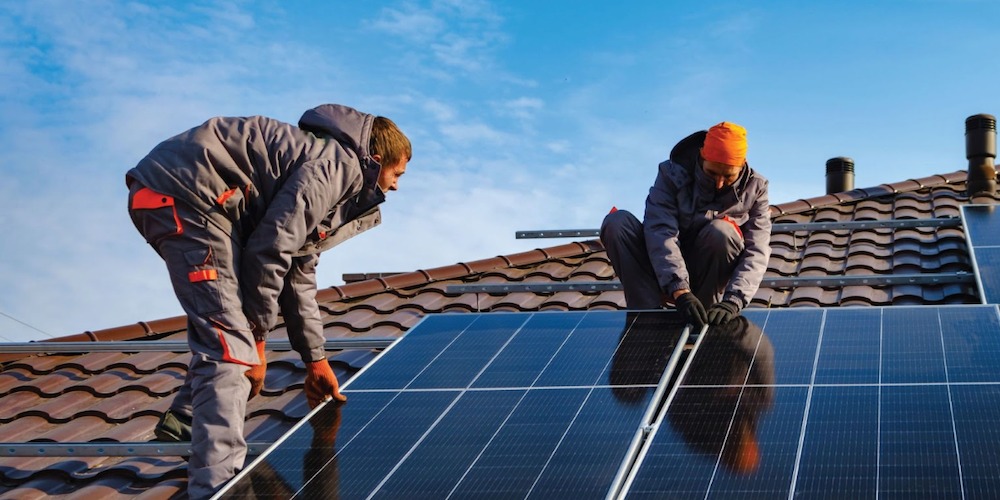
Solar panels collect sunlight and convert it into direct current (DC) electricity. Panels are typically mounted on your roof, though ground-mounted systems are also an option. Most residential panels are made of silicon, with monocrystalline and polycrystalline designs among the common types. Efficiency, cost, appearance, and performance vary by model.
An inverter converts DC electricity into alternating current (AC), which is what your home's appliances and outlets use. Common residential configurations include string inverters, microinverters, and systems using power optimizers. Microinverters may offer advantages in some installations, particularly where shading or panel-level monitoring is a consideration, but the appropriate configuration depends on the property and system design.
A meter tracks electricity flowing between your home and the grid, depending on the utility setup. If you're connected to the grid—most homes are—you may participate in a net-metering or other export-credit program where available. The value of excess electricity sent to the grid depends on your utility and local rules.
A solar powered backup battery stores electricity for use when the sun isn't producing enough power or when the grid goes down. Without a battery, a standard grid-connected solar system generally shuts off during a blackout for safety reasons. With an appropriately configured battery system, selected household loads may continue operating during an outage.
- Solar panels: Convert sunlight to DC electricity. Costs vary by system size, equipment, installation, and location.
- Inverter: Converts DC electricity to AC for household use. Pricing varies by equipment and system design.
- Mounting hardware: Secures panels to a roof or other approved structure. Costs vary by installation.
- Battery: Stores electricity for later use or backup. Pricing depends on capacity, equipment, installation, and configuration.
- Permits and installation: Professional setup and local permitting costs vary by location and project.
How to Get Solar Power for Your Home: Step by Step
If you're ready to get solar power for your home, following a structured comparison process can help you evaluate whether a system fits your property and budget.
Step 1: Understand your energy use. Pull your last 12 months of electric bills. How many kilowatt-hours (kWh) do you use per month? Per year? Household electricity use varies substantially, so use your own historical consumption when estimating system size. Your solar system may be designed to offset a portion or a large share of that usage depending on your goals, roof, utility rules, and available sunlight.
Step 2: Evaluate your roof. Solar panels need sunlight. Which direction does your roof face? South-facing roofs can be favorable in many parts of the Northern Hemisphere, while east- and west-facing roofs can also work depending on the site. Roof condition, shading, orientation, slope, and available area all affect potential output. Check for shading from trees, chimneys, or nearby buildings.
Step 3: Get multiple quotes. Don't go with the first company you find. Getting multiple quotes can help you compare equipment, system design, warranty terms, installation costs, financing, and customer reviews. A lower-priced system and a higher-priced system can differ in equipment, warranty coverage, installation scope, and other terms, so compare the complete offer rather than price alone.
Step 4: Understand financing. Options may include cash purchases, solar loans, leases, and power purchase agreements (PPAs). Paying cash avoids loan interest but requires more upfront capital. A solar loan spreads payments over time, but interest and financing fees increase the total amount paid. A lease or PPA may require less upfront payment but typically involves contractual payments and does not give you the same ownership structure as purchasing the system. Compare the total cost, contract terms, ownership, escalation provisions, and exit conditions before choosing.
Step 5: Check current tax incentives. Federal, state, and local solar incentives can change over time and may have eligibility requirements. For example, the federal Residential Clean Energy Credit was generally available for qualifying property placed in service through December 31, 2025, and was terminated for expenditures after that date under current IRS guidance. Check the current IRS guidance and applicable state or local programs before including any tax credit in your financial calculations.
- 1: Review electric bills to estimate your actual energy use.
- 2: Assess roof condition, orientation, shading, and available space.
- 3: Compare multiple quotes and complete system specifications.
- 4: Compare financing options, total costs, and contract terms.
- 5: Check current federal, state, and local incentives before making assumptions about savings.
The Role of Solar Powered Backup Batteries
A solar powered backup battery for home can add energy storage to a solar system and provide backup power when configured for that purpose. Here's what you need to know.
How batteries work. During the day, your solar panels may produce more electricity than your home uses. Instead of sending all of that excess electricity to the grid, a battery can store some of it. At night, when your panels aren't producing, you can draw from the battery. During a blackout, an appropriately configured battery system may power selected household loads.
Popular battery options. The Tesla Powerwall is one well-known brand, but there are others, including Enphase IQ Battery, LG energy-storage products, Generac PWRcell, and Sonnen. Each has different capacities, power outputs, warranties, installation requirements, and pricing. Product availability can vary by market and over time.
Capacity matters. Battery capacity is measured in kilowatt-hours (kWh). How long a battery can power appliances depends on the battery's usable capacity, power output, household consumption, and which loads are connected. A battery that can support a refrigerator and selected lights may not have enough capacity or power output for a central air conditioner or electric dryer. To support more appliances, system capacity and configuration need to be evaluated.
Cost of batteries. Installed battery costs vary considerably based on capacity, equipment, installation complexity, location, and other factors. For some homeowners, the financial payback period for a battery may be longer than for solar panels alone. However, a battery can provide additional value in areas with frequent outages, certain demand charges, or time-of-use electricity rates. Whether it pays for itself depends on the individual project and utility structure.
- Tesla Powerwall: Capacity, installed price, and warranty depend on the current model, installation, location, and applicable terms.
- Enphase IQ Battery: Available capacity and pricing vary by model, installation, and market.
- LG energy-storage products: Capacity, availability, warranty, and pricing vary by product and market.
- Generac PWRcell: System configuration, capacity, installation requirements, and pricing vary by project.
Net Metering: Selling Your Extra Power
Most home solar systems are connected to the grid. When your panels produce more electricity than you need, the excess may flow to the utility. Under a net-metering or other export-credit program, you may receive credits or compensation for that electricity. At night or on cloudy days, you may use electricity from the grid depending on your system and utility arrangement.
Net-metering policies vary by state and utility. Some programs may provide credits based on retail electricity rates, while others use different compensation structures. Some utilities have changed or are changing their export-credit rules. Check your utility's current policy before going solar. In areas with less favorable export compensation, adding a battery may be worth considering, depending on the system economics and your electricity-use pattern.
Cost of an Electric Solar System
The total cost of an electric solar system depends on system size, panel type, inverter configuration, installer, roof characteristics, permitting, financing, and location. Published price ranges can become outdated quickly, so use current local quotes when estimating the actual project cost.
Before incentives. Residential solar pricing is commonly quoted on a per-watt basis, but the actual price varies by market and project. A typical system may cost substantially different amounts depending on size, equipment, installation conditions, and location.
After incentives. Your net cost depends on which incentives you actually qualify for and when the system is installed. Do not assume a federal 30% residential solar tax credit is currently available for a new 2026 installation; current IRS guidance states that the Residential Clean Energy Credit is not available for expenditures made after December 31, 2025. State and local incentives may still have their own rules and dates.
Payback period. A solar system's payback period depends on installation cost, electricity rates, system production, financing costs, incentives, maintenance, utility export compensation, and other factors. A specific payback period cannot be guaranteed for every homeowner. Use your own utility bills and current installation quotes to calculate a project-specific estimate.
- 4 kW: Costs and potential savings vary by location, equipment, installation, and electricity rates.
- 6 kW: Costs and potential savings vary by location, equipment, installation, and electricity rates.
- 8 kW: Costs and potential savings vary by location, equipment, installation, and electricity rates.
- 10 kW: Costs and potential savings vary by location, equipment, installation, and electricity rates.
Leasing vs. Buying: Which Is Better?
This is one of the common questions about home solar. The appropriate option depends on your financial situation, expected time in the home, available capital, tax situation, and contract terms.
Buying (cash or loan) gives you ownership of the system. If you qualify for an applicable tax incentive, ownership may allow you to claim it. You also retain the potential economic benefits associated with the system's electricity production, but you are responsible for the upfront cost or financing payments and may be responsible for maintenance and other ownership costs.
Leasing may require less upfront money. You pay according to the lease agreement or, with a power purchase agreement, according to the electricity produced under the contract. You generally do not own the system, and tax benefits may belong to the system owner rather than the homeowner. When selling your home, the contract may need to be transferred, bought out, or otherwise addressed according to its terms.
For homeowners who plan to stay in their home for several years, buying may offer different long-term economics than leasing, but there is no universal better choice. Compare total payments, ownership, tax treatment, maintenance responsibilities, escalation clauses, transfer requirements, and expected energy production before deciding.
Common Questions About Home Solar
How long do solar panels last?
Many solar panels come with long-term performance warranties, often around 25 years or more. Panels generally continue producing electricity after the warranty period, although output can decline over time. Actual performance depends on the panel, installation conditions, environment, and manufacturer warranty.
Do I need a battery?
Not necessarily. A battery may be useful if you want backup power during grid outages, want to shift electricity use to different times, or have utility rates that make energy storage potentially valuable. Whether a battery makes financial sense depends on your utility rules, electricity rates, outage frequency, system cost, and household needs.
Will solar work on my roof?
It depends. Roof condition, orientation, shading, slope, available space, local climate, and structural considerations can all affect suitability. A qualified installer can conduct a site assessment before providing a final system design and quote.
Can I install solar myself?
Some homeowners may be able to undertake parts of a solar installation themselves, but requirements vary by location. DIY solar can involve electrical work, permitting, inspections, roof work, and utility interconnection requirements. Mistakes can create safety risks, so understand local requirements and consider qualified professional installation where appropriate.
What happens during a blackout?
If you don't have a battery or another properly configured backup system, a standard grid-connected solar system generally shuts off during a blackout to protect utility workers and the electrical grid. With a compatible battery and backup configuration, selected household circuits may continue operating according to the system's capacity and settings.
Your Next Step
Solar power has become a widely considered option for homeowners who want to explore renewable electricity, potential energy-cost changes, and backup-power capabilities. Whether you're looking for electric for home solutions, want to get solar power for your home, or are considering a home solar system with a solar powered backup battery for home, the path forward starts with information.
Get quotes from multiple installers. Understand your financing options. Review the current utility rules and available incentives. Calculate the economics using your specific roof, electricity use, system design, and local rates. Solar may make sense for some homeowners, while other homeowners may find that the costs, roof conditions, utility rules, or financing terms do not fit their situation.
The sun provides a renewable source of energy, but the financial and practical benefits of using it depend on the specific property and system. Compare the available options carefully before making a purchase or signing a long-term agreement.