
Southwest’s profits are down 42 this year but it’s the top U.S. airline stock
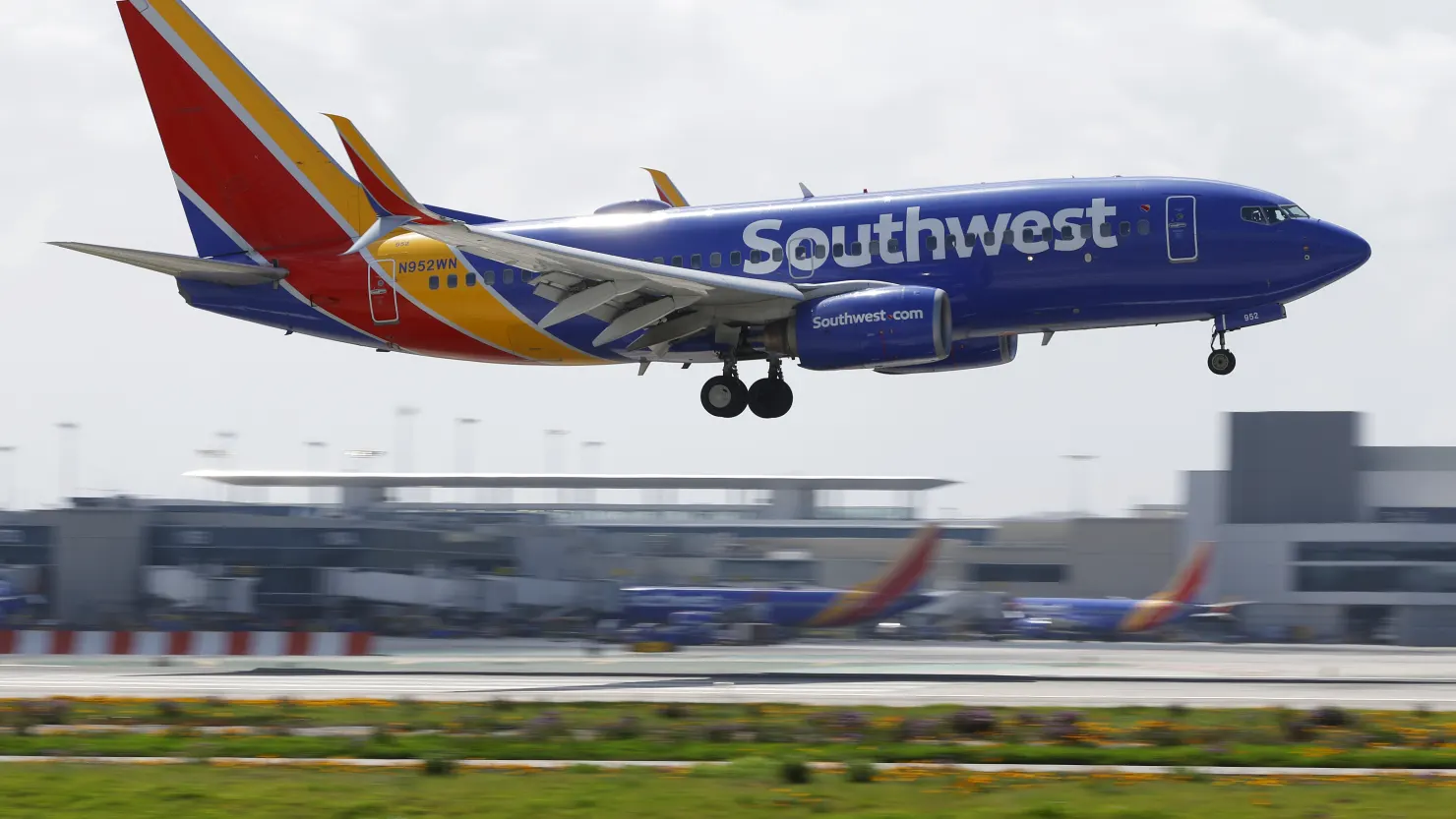
A Southwest Airlines Boeing 737 airplane arrives at Los Angeles International Airport from San Francisco on March 28, 2025 in Los Angeles, California.
Southwest Airlines shares have surged nearly 24% this year—outperforming all other major U.S. passenger carriers—despite a 42% drop in profit through the first nine months. The rally reflects investor optimism around the airline’s radical transformation from a quirky, one-size-fits-all carrier to a more conventional model featuring assigned seating and extra-legroom options for a fee.
Starting January 27, Southwest will abandon its iconic open seating and introduce assigned seats across its all-Boeing 737 fleet, with premium rows offering additional legroom for an extra charge. The move, part of a broader strategic shift that also includes eliminating free checked bags and introducing basic economy fares, is forecast to drive $1 billion in pretax earnings next year and $1.5 billion by 2027.
A Strategic Pivot Amid Industry Headwinds
While rivals like Delta and United have posted stronger profits, Southwest’s stock surge is tied to its “initiatives, not the [demand] environment,” noted Raymond James analyst Savanthi Syth. The airline has faced pressure from softening demand linked to Trump’s tariffs and the recent government shutdown, forcing it to lower its 2025 earnings outlook. Yet, the prospect of new revenue streams has captivated Wall Street.
Barclays upgraded Southwest this month, projecting adjusted earnings above $4 per share in 2026 and over $6 by 2027. CEO Bob Jordan told CNBC that early bookings “reflect the business case for assigned seating and extra legroom,” signaling confidence in the revenue potential of the changes.
Shedding Legacy Policies for Modern Competitiveness
Southwest’s overhaul marks the end of several long-standing differentiators: open seating, two free checked bags, and a single-class cabin. The shift aligns the carrier more closely with its larger rivals, aiming to capture higher-yielding customers willing to pay for comfort and convenience.
The transition comes as the airline navigates broader industry challenges, including volatile fuel costs, economic uncertainty, and shifting travel patterns. However, by monetizing seating and unbundling services, Southwest is betting it can boost per-passenger revenue without alienating its loyal customer base.
As Southwest prepares to unveil its full-year outlook in late January, investors will be watching closely to see whether these foundational changes can deliver the promised earnings lift—and sustain the stock’s remarkable run in a still-turbulent market.
Recent
News





Newsletter
Subscribe to our mailing list to get the new updates!

Subscribe our newsletter to stay updated
Most
Reviews
Markets

- Fri, 16 Jan 2026
Why Canada Goose (GOOS) Dipped More Than Broader Market Today
Markets

- Mon, 19 Jan 2026
Swiss Franc Is Standout Haven Bet in Trump’s Tariff Flareup
Markets
- Sun, 18 Jan 2026
3 No-Brainer Dividend Stocks to Buy Right Now
Finance

- Sun, 18 Jan 2026
Europe already ‘at war’ with Russia, says central banker
Finance
- Sat, 24 Jan 2026