
Is Indiana cheating? Is it a conspiracy? No, the Hoosiers are just that good
The story of Indiana football's ascent to the precipice of a 16-0 national championship season defies conventional wisdom, leaving the college football world scrambling for explanations and, in some cases, succumbing to baseless conspiracy theories. As the Hoosiers prepare to face Miami for the title, the central question remains: how did this happen at a historically dormant program, and why does it seem to break every established rule of team-building?
Head coach Curt Cignetti, when asked for his secret, offers a blueprint familiar to any coach: the right people, great staff continuity, veteran leadership, daily commitment, and a solid plan. Yet, this explanation feels insufficient to many, as countless other programs preach the same principles without approaching historic success. This dissonance has fueled a growing undercurrent of suspicion on social media and among some athletic administrators—a search for a nefarious "why" in the absence of a satisfying "how."
Skepticism reached a fever pitch after Indiana's dominant semifinal win over Oregon, sparked by plays like cornerback D'Angelo Ponds' opening-drive interception return for a touchdown. Online speculation ran wild, alleging stolen signs, hacked game plans, or compromised communications—echoes of the Michigan sign-stealing scandal but without any evidence. As was the case two years ago, such expansive espionage is both highly improbable given modern security protocols and unsubstantiated by fact.
Applying Occam's Razor suggests a simpler truth: a proven winner at every level, Cignetti arrived in the Big Ten and continued winning with a roster whose talent was profoundly underestimated. Indiana's success is built on a foundation that, while exceptional in its execution, is not mysterious in its composition: a veteran-laden team buoyed by strong NIL support, elite player development, and key transfers like Ponds who followed Cignetti from James Madison.
The Hoosiers have constructed a complete team without an obvious weakness. They boast balance on both sides of the ball, NFL-caliber talent at skill positions, a national-best turnover margin, and disciplined play. In an era where even blue-blood programs struggle with continuity due to the transfer portal, Indiana has synergized experience, cohesion, and coaching.
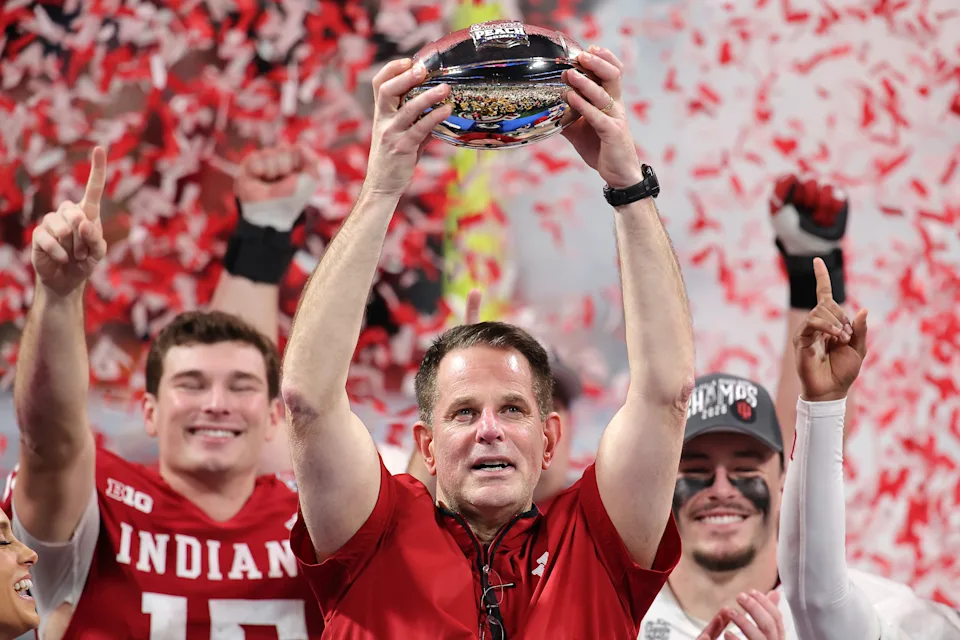
Perhaps the most rational explanation is also the most unsettling for the sport's traditional hierarchy: college football's evolving landscape created a unique opening, and through a combination of sharp evaluation, culture, and timing, Indiana walked through it. If Cignetti had implemented this same model at a traditional powerhouse, the story would be celebrated, not scrutinized.
As Indiana stands on the brink of history, its greatest sin may simply be achieving the improbable at a place where no one thought it was possible. The search for a clandestine reason overlooks the apparent one: sometimes, against all odds, everything aligns perfectly, and a team simply plays championship football.